Introduction
Malnutrition is highly prevalent in the intensive care unit (ICU), affecting approximately 40% of critically ill patients [1]. These patients constitute a heterogeneous group with diverse nutritional requirements influenced by baseline nutritional risk, severity of illness, inflammatory status, and underlying comorbidities [2]. Despite the established importance of nutrition, a significant gap remains between clinical guidelines and bedside practice, with ICU patients typically receiving only 50–60% of their prescribed caloric intake [3-4]. These consistent underfeeding results in a cumulative calorie debt, which is linked to prolonged mechanical ventilation, impaired immune function, and increased susceptibility to secondary infections, ultimately leading to worsened clinical outcomes [5-8].
Current evidence suggests that adequate nutritional therapy can mitigate the risk of adverse outcomes. In mechanically ventilated patients, early enteral nutrition (EN) is prioritized over parenteral nutrition (PN) or supplemental PN due to its association with superior clinical results [2]. The primary goals of such therapy are to attenuate the loss of lean body mass and prevent physiological deterioration; however, determining the optimal caloric and protein requirements remains a subject of ongoing debate. While various nutritional assessment tools exist for the general hospital population, they often lack validity in the ICU setting or are too cumbersome for routine use [9-15], which can lead to inadequate nutritional support for critically ill patients and negatively impact their recovery outcomes. Furthermore, tools developed in Western countries may not accurately reflect the unique nutritional requirements and body compositions of Asian populations.
The Nutrition Risk in Critically Ill (NUTRIC) score is a validated tool specifically designed for the ICU; however, its reliance on interleukin-6 (IL-6) levels limits its utility in resource-constrained settings. The modified NUTRIC (mNUTRIC) score, which excludes IL-6, provides a practical alternative for identifying patients most likely to benefit from aggressive nutritional therapy [15-16]. The rationale for this study stems from the high prevalence of iatrogenic underfeeding, where patients fail to meet targets due to avoidable factors such as under-prescription, fluid restriction, perceived gastrointestinal intolerance, and "ramp-up" strategies [17-20]. The calorie debt may have a particularly pronounced impact in developing countries like India, where baseline malnutrition is high. By assessing the gap between prescribed and delivered nutrition, we can identify specific barriers—such as procedural delays or staff negligence—and determine if nutritional adequacy can effectively modify the mortality risk associated with high mNUTRIC scores.
The purpose of this study is to evaluate the alignment between clinical guidelines and actual nutritional practices in mechanically ventilated patients. Specifically, this report aims to: (1) assess whether patients on mechanical ventilation receive adequate protein and caloric intake relative to their prescribed targets; (2) identify and categorize the specific reasons for underfeeding and skipped feeds in the ICU setting; and (3) evaluate whether patients with a high mNUTRIC score face a greater risk of mortality than those with low scores and determine if achieving nutritional adequacy modifies the association between mNUTRIC scores and mortality outcomes.
Materials and Methods
Study Design and Setting
This quantitative, prospective observational cohort study was conducted over a two-year period (December 1, 2019, to November 30, 2021) at a tertiary care hospital in Bhubaneswar, Odisha. The study was situated across multidisciplinary Intensive Care Units (ICUs), including the Medicine, Surgery, Neurology, and Neurosurgery departments. To achieve a representative sample, patients were selected using consecutive sampling to reach a calculated sample size of n = 196 (based on a 95% confidence level and 7% absolute precision).
Participant Selection and Eligibility
The study included adult patients who required mechanical ventilation for at least 48 hours and artificial nutritional support for a minimum of 12 days. Exclusion criteria were strictly defined: patients aged <18 or >80 years; those requiring nutritional therapy for fewer than 12 days; patients admitted for elective surgeries, brain death, or palliative care; and cases of poisoning without associated organ dysfunction.
Data Collection and Risk Assessment
Upon ICU admission, comprehensive baseline data and laboratory investigations were recorded, including complete blood counts, serum electrolytes, urea, creatinine, and arterial blood gas (ABG) analysis. Severity of illness and nutritional risk were stratified using the APACHE II, SOFA, and modified Nutrition Risk in Critically Ill (mNUTRIC) scores (low risk: <5; high risk: >5). Nutritional requirements were tailored to each patient: Ideal Body Weight (IBW) was calculated using the Devine formula (50 kg + 0.9 (Height in cm – 152) for males; 45.5 kg + 0.9 (Height in cm – 152) for females. For patients with a BMI > 25 kg/m2, an adjusted body weight was used—calculated as IBW + 0.25 (Actual Weight - IBW)—to prevent overestimation of energy requirements.
Nutritional Protocol and Delivery
Following hemodynamic stabilization and clinical confirmation of gastrointestinal integrity, enteral nutrition (EN) was initiated via nasogastric or percutaneous endoscopic gastrostomy (PEG) tubes. Feeds were administered using an intermittent bolus technique, ideally within 24 hours of admission. A conservative "ramp-up" strategy was employed, starting at 15-20 kcal/kg/day and escalating to 25 kcal/kg/day following the acute phase, with a target protein intake of 1.2 g/kg/day. Parenteral nutrition (PN) served only as a secondary modality when EN was contraindicated. Nutritional adequacy was operationally defined as the delivery of >80% of prescribed caloric and protein targets over the 12-day study horizon. Gastric residual volume (GRV) was monitored with an interruption threshold of 500 mL. All instances of skipped or delayed feeds were recorded prospectively via standardized forms and ICU nursing charts.
Outcome Measures and Statistical Analysis
The primary endpoints were the attainment of nutritional adequacy, its impact on organ function (quantified by Day 12 SOFA scores), and the incidence of secondary healthcare-associated infections (VAP, CAUTI, CLABSI, and SSI). Secondary outcomes included the duration of mechanical ventilation and total ICU length of stay. Statistical analysis was performed using IBM SPSS v24.0. Categorical variables were analyzed using Chi-square tests, while continuous variables were expressed as Mean (SD) or Median (IQR) as appropriate. Independent sample t-tests were used to compare means between the "adequate" and "inadequate" nutritional groups. A p-value < 0.05 was considered statistically significant.
Ethical Considerations
The study protocol was approved by the Institutional Ethics and Scientific Research Committees. Given its observational nature, it was categorized as a "Minimum Risk" study. Formal informed consent was obtained from the legal guardians of all participating patients.
Results
Patient Characteristics and Clinical Baseline
A total of 628 patients were assessed, with 200 subjects fulfilling the inclusion criteria for the final analysis. The majority of participants were male (65.5%) and aged over 50 years (68.0%). At admission, the mean APACHE II, SOFA, and mNUTRIC scores were 21.0±6.2, 5.1±2.5, and 3.7 ±1.9, respectively. Respiratory (33.0%) and neurological (27.0%) diseases were the primary indications for ICU admission. Enteral nutrition was the predominant feeding modality (93.5%). The median time for feeding initiation was 18 hours (IQR: 8.3–50.8), though initiation was delayed (>48 hours) in 29.0% of cases, primarily due to surgical interventions and clinical instability.
Nutritional Delivery and Adequacy
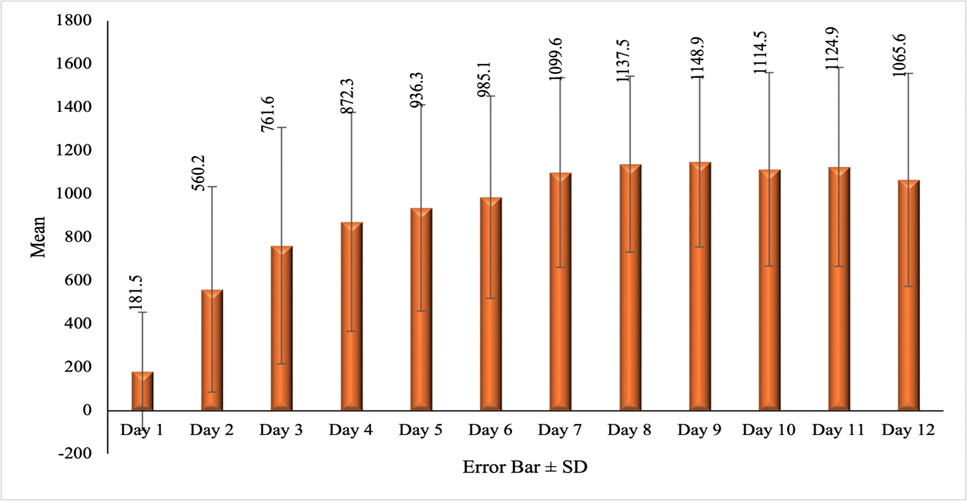
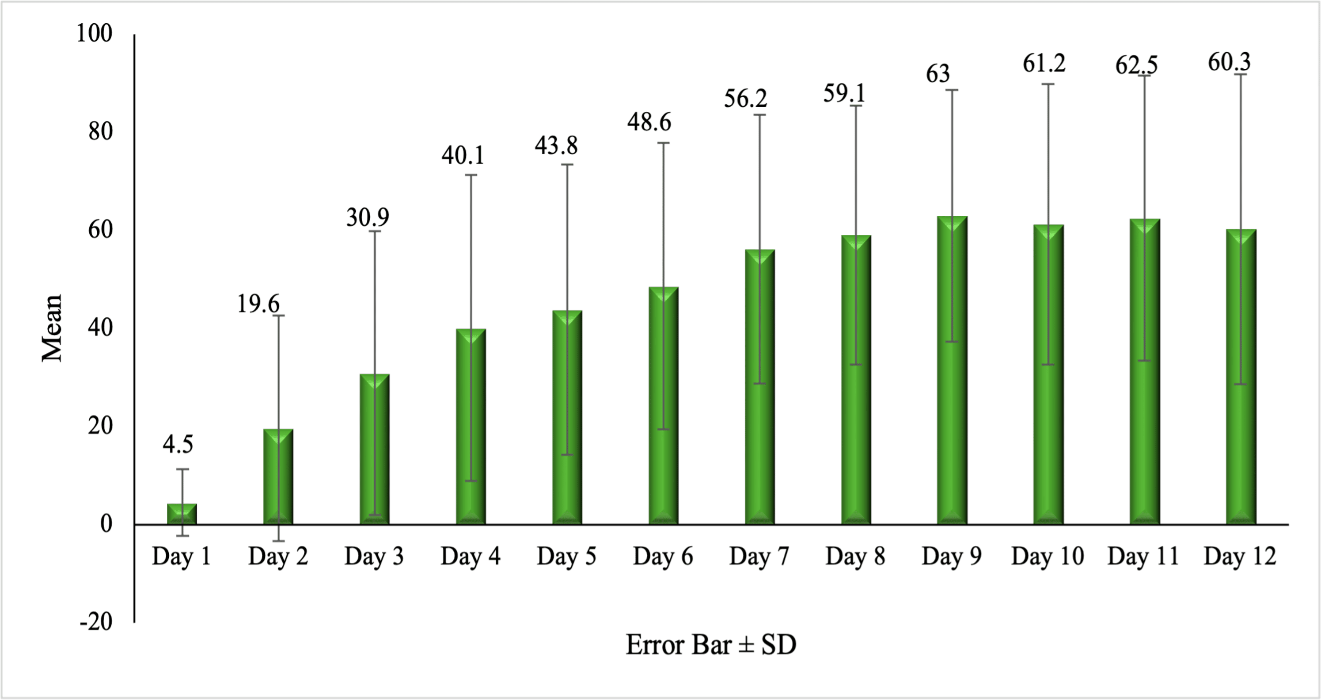
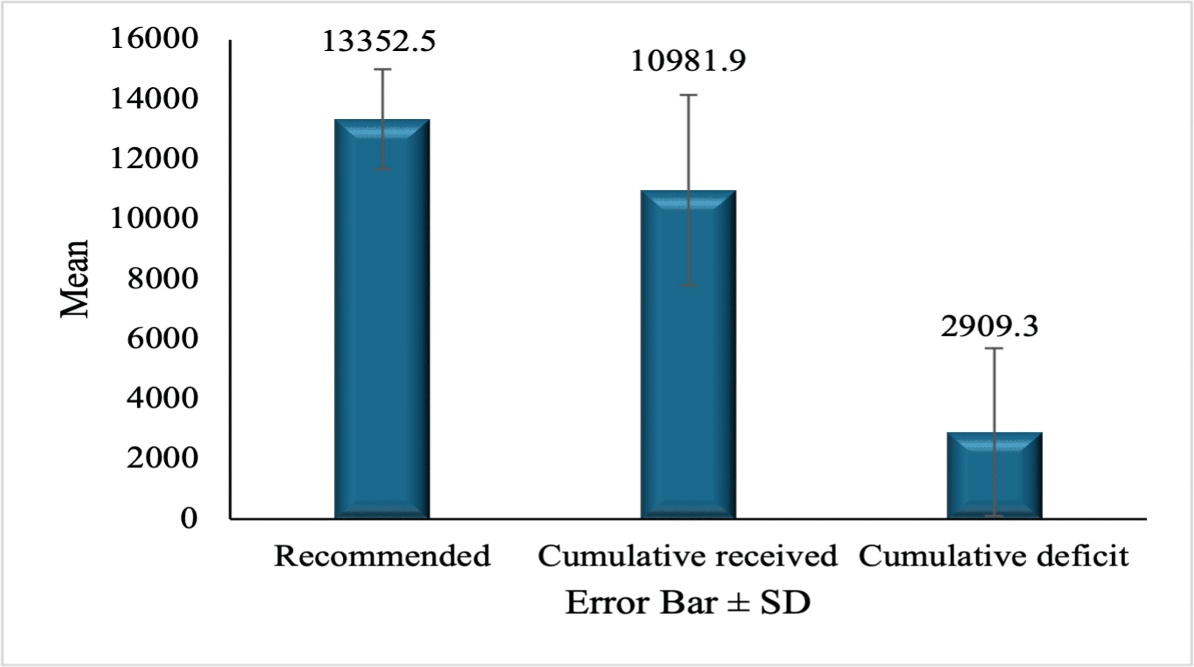
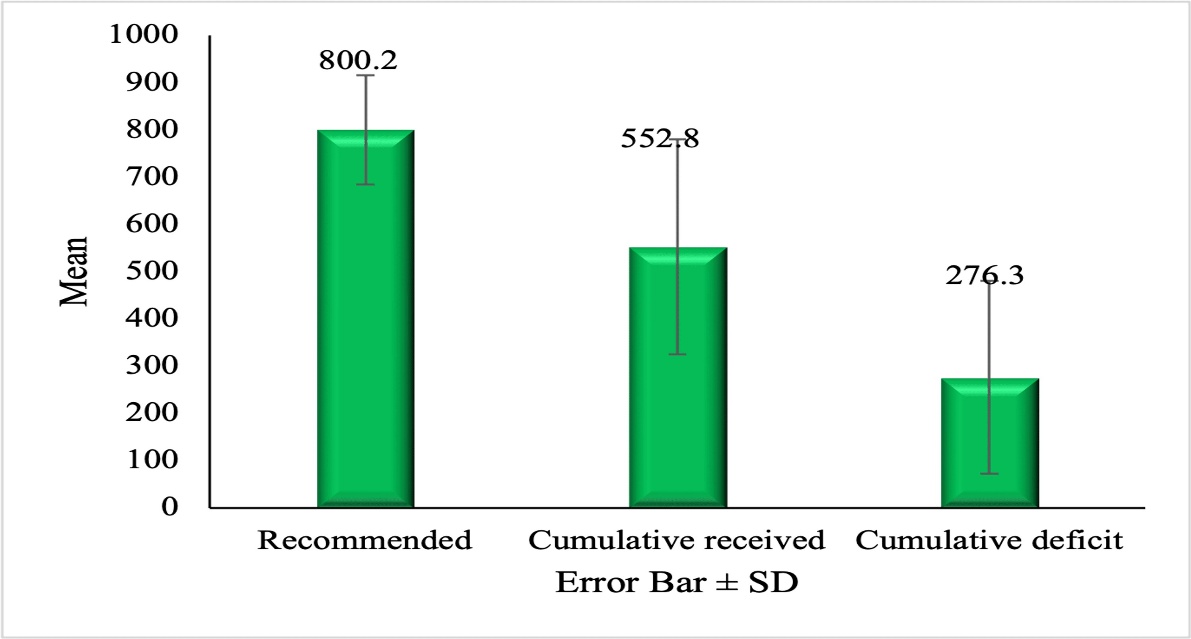
Caloric and protein delivery showed a progressive increase from Day 1 to Day 12 (Table 1). Mean daily caloric intake rose from 181.5 ± 272.5kcal to 1065.6 ± 491.3 kcal (Figure 1), while protein delivery increased from 4.5 ±6.8g to 60.3±31.6g (Figure 2). Caloric adequacy (>80% of target) was achieved by 70.0% of patients, with the majority reaching this threshold by Day 6. In contrast, protein adequacy was lower, with only 56.5% of patients reaching targets by the study endpoint. The mean cumulative caloric deficit was 2909.3 ±2806.3kcal (21.8% of recommended), and the protein deficit was 276.3±203.6g (34.5% of recommended) (Figure 3, 4). A critical factor hindering adequacy was the time to restart feeds after interruption, with a mean lapse of 34.0±32.3 hours.
| Day | Calories (kcal) | Protein(gm) | ||
| Mean (SD) | Median (IQR) | Mean (SD) | Median (IQR) | |
| 1 | 181.5 (272.5) | 0 (0-400) | 4.5 (6.8) | 0.0 (0.0-9.4) |
| 2 | 560.2 (474.9) | 600 (0-900) | 19.6 (23.0) | 15.0 (0.0-25.0) |
| 3 | 761.6 (545.5) | 900 (50-1200) | 30.9 (28.9) | 30.0 (1.3-45.0) |
| 4 | 872.3 (505.7) | 984 (600-1200) | 40.1 (31.2) | 31.1 (15.0-66.0) |
| 5 | 936.3 (476.6) | 1037 (734-1228.5) | 43.8 (29.6) | 40.0 (22.5-66.0) |
| 6 | 985.1 (467.3) | 1068 (800-1307) | 48.6 (29.2) | 53.2 (22.5-68.5) |
| 7 | 1099.6 (437.5) | 1145.5 (900-1334) | 56.2 (27.4) | 59.4 (40.0-74.6) |
| 8 | 1137.5 (406.3) | 1151 (948-1368.5) | 59.1 (26.4) | 60.0 (41.6-75.0) |
| 9 | 1148.9 (393.6) | 1145.5 (944-1380) | 63.0 (25.7) | 66.0 (46.4-81.9) |
| 10 | 1114.5 (447.4) | 1145.5 (936.5-1377.5) | 61.2 (28.6) | 66.0 (45.0-83.6) |
| 11 | 1124.9 (459.3) | 1200 (984-1387.5) | 62.5 (29.1) | 66.0 (50.0-84.5) |
| 12 | 1065.6 (491.3) | 1163 (894-1333.5) | 60.3 (31.6) | 66.0 (42.5-84.5) |
Outcomes and Comparative Analysis
Achieving caloric adequacy was associated with significantly improved clinical parameters (Table 2). The calorie-inadequate group had a significantly longer time to initiate feeding (50.8 vs. 21.8 hours; p < 0.001), a higher number of held feeds (12.3 vs. 7.5; p = 0.004), and a longer duration to restart feeds after interruption (44.1 vs. 24.0 hours; p < 0.001). Crucially, organ function on Day 12 (SOFA score) was significantly worse in the inadequate group (6.5±4.4) compared to the adequate group (4.1±3.9; p < 0.001). Furthermore, ventilator-free days were significantly lower in the inadequate group (5.0±6.6 days) than in the adequate group (8.9± 6.6 days; p < 0.001).
| Variables | Inadequate N=94) Mean (SD) | Adequate (N=106) Mean (SD) | p-value |
| Age | 55.1 (13.9) | 58.0 (14.7) | 0.15 |
| APACHE II Score | 21.0 (5.7) | 21.0 (6.6) | 0.984 |
| SOFA Score (Day 1) | 5.2 (2.7) | 5.0 (2.4) | 0.433 |
| mNUTRIC Score | 3.8 (1.9) | 3.7 (1.9) | 0.827 |
| Height (cm) | 162.2 (7.3) | 158.0 (5.4) | <0.001 |
| Ideal Body Weight (kg) | 58.0 (7.4) | 53.5 (5.8) | <0.001 |
| Blood Glucose Level (mg/dl) | 182.9 (43.3) | 185.5 (46.5) | 0.68 |
| Time to Initiation of Feeding (hr) | 50.8 (50.4) | 21.8 (22.7) | <0.001 |
| Number of Feeds Held | 12.3 (11.3) | 7.5 (7.1) | 0.004 |
| Time to Restart Feed After Interruption (hr) | 44.1 (38.1) | 24.0 (21.2) | <0.001 |
| Cumulative Calories Received (kcal) | 8515.0 (2046.1) | 13169.5 (2253.2) | <0.001 |
| Cumulative Proteins Received (gm) | 440.1 (180.8) | 652.8 (218.9) | <0.001 |
| SOFA Score (Day 12) | 6.5 (4.4) | 4.1 (3.9) | <0.001 |
| Days on Mechanical Ventilation | 16.2 (6.0) | 17.4 (8.4) | 0.279 |
| Ventilator Free Days | 5.0 (6.6) | 8.9 (6.6) | 0 |
| Length of Stay in ICU (days) | 21.7 (9.3) | 23.9 (11.9) | 0.155 |
Mortality and mNUTRIC Risk Stratification
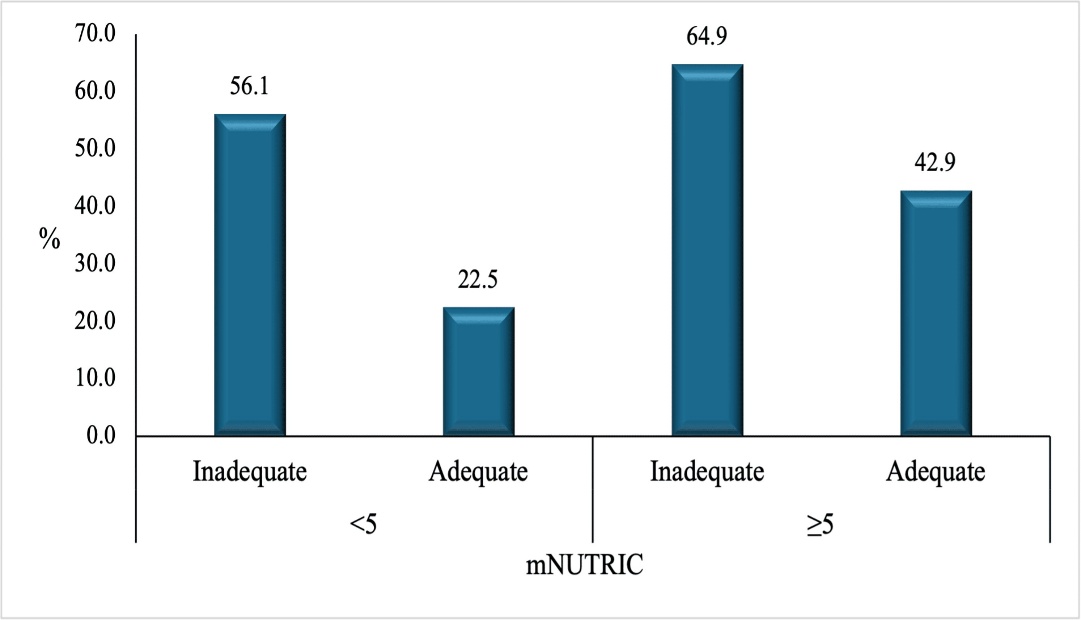
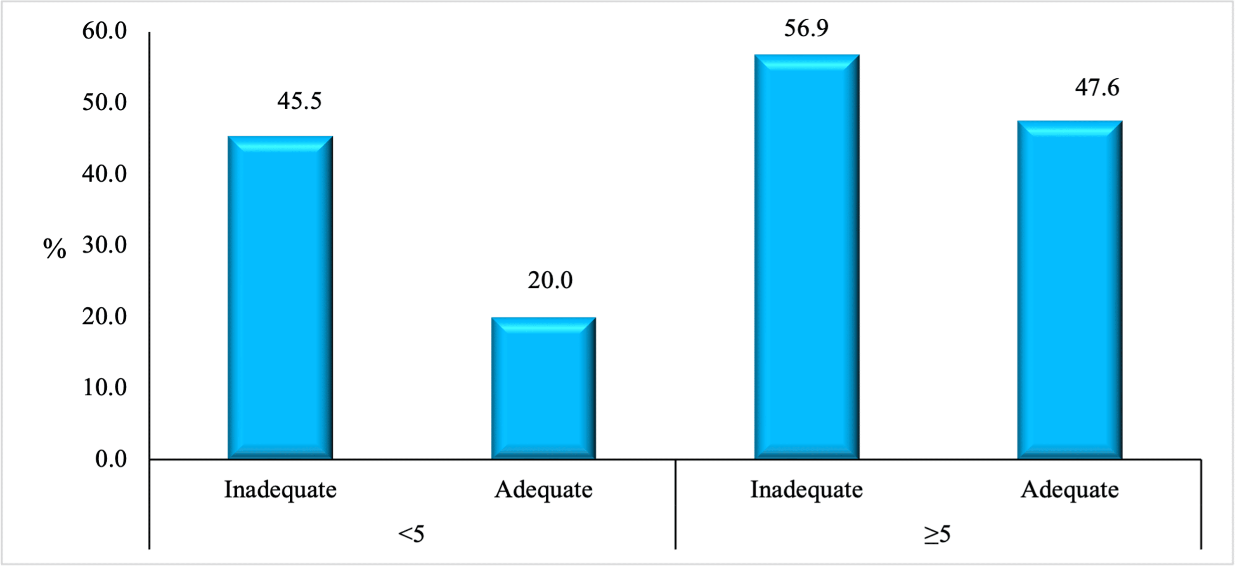
Mortality was significantly higher in calorie-inadequate cases (59.6%) compared to adequate cases (29.2%; p < 0.001). Similar trends were observed for protein adequacy (p = 0.008). When stratified by mNUTRIC score, high-risk patients (≥5) had a significantly higher mortality rate (54.2%) than low-risk patients (37.5%; p = 0.022) (Figure 5). In the low-risk mNUTRIC category, calorie inadequacy was strongly associated with increased mortality (56.1% vs. 22.5%; p < 0.001). In high-risk patients, mortality was also higher in the inadequate group (64.9% vs. 42.9%), though this association did not reach statistical significance (p = 0.06) (Figure 6).
Discussion
This study demonstrated significant nutritional underfeeding in mechanically ventilated patients, with only 70% reaching caloric targets and 56.5% reaching protein targets. The accumulation of a "calorie debt" (2909.3 kcal) and protein deficit (276.3 g) was significantly associated with worse organ function (higher Day 12 SOFA) and increased mortality, particularly in patients with high mNUTRIC scores. A major strength is the 12-day observation period, which captures the transition from acute to late illness phases. Being a single-center study, it ensured uniformity in nursing practices, sedation protocols, and multidisciplinary ICU care, reducing confounding environmental variables.
The data reveals a strong inverse correlation between nutritional adequacy and both mortality and organ dysfunction. Inadequate caloric intake (<12 kcal/kg/day) was linked to a mortality rate of 59.6% compared to 29.2% in the adequate group. Our feeding initiation time (18 hours) was better than Dijkink et al. [20] and Cahill et al. [21], but our findings on the negative impact of calorie debt align with Faisy et al. [22] and Villet et al. [23]. Unlike the PermiT trial [24], which showed no mortality difference with permissive underfeeding (likely due to their supplemental protein), our underfed group was deficient in both energy and protein, leading to significantly higher mortality. The study highlights that clinical "inertia" in restarting feeds after interruptions (mean 34-hour lapse) is a major systemic failure contributing to iatrogenic underfeeding. While we anticipated that high mNUTRIC patients would show the most benefit from feeding, we also observed significantly increased mortality in "low-risk" patients when underfed. This suggests that the baseline targets in our study (15-20 kcal/kg/day) were already conservative, and dropping below them is detrimental regardless of baseline risk. The "ramp-up" strategy, while intended to prevent refeeding syndrome as per ESPEN guidelines [25], inherently creates an early deficit that is difficult to compensate for in the later stages of ICU stay.
The present study has certain limitations; as a single-center study in Eastern India, the results may reflect regional practices and a specific patient mix characterized by high COVID-19 prevalence during the study period, which may affect generalizability. Regarding internal validity, the observational nature of the work limits the ability to establish a direct causal link between feeding and mortality, although the use of validated tools like mNUTRIC and APACHE II scores helped adjust for baseline disease severity. To minimize bias, we specifically employed a 12-day study horizon to ensure that the measured impact of nutrition on clinical outcomes was not masked by early deaths or rapid ICU discharges unrelated to the studied feeding practices.
Conclusions
In conclusion, this work confirms that cumulative calorie and protein deficits are independent predictors of poor clinical outcomes in the ICU; the findings suggest that adhering to strict fasting guidelines and minimizing interruption times (e.g., post-surgery or procedures) are low-cost, high-impact interventions that are highly sustainable and can be implemented in any ICU setting. Practically, clinicians should prioritize the early initiation of feeds and adopt proactive "catch-up" strategies after procedures to minimize nutritional debt, potentially utilizing high-protein formulas to overcome the substantial protein deficit observed in this cohort. Future research and next steps should focus on multicenter randomized trials comparing standard "ramp-up" protocols with "early-reach" targets supplemented with high-protein feeds to determine if the cumulative debt can be safely avoided and translated to improved survival across broader contexts.
Declarations
Ethics approval and consent to participate
This study was conducted in accordance with the Declaration of Helsinki. Approval was obtained from the Institutional Ethics Committee (IEC/AMRI/BBSR/2019/0015) prior to the commencement of the study. Written informed consent was obtained from the legal guardians or next of kin of all participants.
Data Availability
The datasets generated and analyzed during the current study are available from the corresponding author upon reasonable request.
Conflicts of Interest
The authors declare that they have no competing interests.
Funding Statement
This research received no specific grant from any funding agency in the public, commercial, or not-for-profit sectors.
Acknowledgments
None
Author Contributions
All authors contributed equally to the conceptualization, data collection, drafting of the manuscript, critical revision, and final approval of the version to be published.