Introduction
Gynecological laparoscopic surgery has become a cornerstone in the management of benign and selected malignant gynecological conditions due to its advantages over open surgery, including reduced postoperative pain, shorter hospital stays, and faster functional recovery [1-3]. Advances in minimally invasive techniques have further improved surgical outcomes for procedures such as hysterectomy, myomectomy, adnexal surgery, and diagnostic laparoscopy [4-6].
However, postoperative discomfort remains common, particularly surgical pain, shoulder pain related to pneumoperitoneum, and postoperative nausea and vomiting (PONV), which can negatively affect patient satisfaction and recovery [7-9].
The choice of anesthetic technique plays a critical role in intraoperative safety, postoperative recovery, and healthcare costs. General anesthesia (GA) is widely regarded as the standard approach for laparoscopic surgery, providing optimal airway control, assisted ventilation, and stable surgical conditions [10]. However, GA is associated with adverse effects, including PONV, respiratory complications, delayed mobilization, and increased resource utilization [11-13], which are especially relevant in resource-limited settings.
Spinal anesthesia (SA) has emerged as a potential alternative for selected laparoscopic procedures. It offers advantages such as reduced opioid consumption, preservation of spontaneous ventilation, lower incidence of PONV, and effective postoperative analgesia [14-17]. Several studies have demonstrated the feasibility of SA in laparoscopic surgery, particularly in cholecystectomy and appendectomy, with acceptable safety profiles when patient selection and monitoring are adequate [18-20]. Nevertheless, concerns remain regarding hemodynamic instability and the potential need for conversion to GA.
In gynecological laparoscopy, comparative data between GA and SA are limited and mostly derived from small trials or heterogeneous surgical populations [9,16]. Only a few studies have simultaneously assessed biological parameters, arterial blood gases, postoperative recovery, and economic outcomes in real-world clinical settings. In sub-Saharan Africa, and particularly in the Democratic Republic of Congo, data addressing these issues are scarce.
This cross-sectional analytical study aimed to compare spinal anesthesia and general anesthesia in women undergoing gynecological laparoscopic surgery in Kinshasa. The primary objectives were to assess intraoperative hemodynamic events and postoperative outcomes, while secondary objectives included evaluation of laboratory and arterial blood gas parameters, patient and surgeon satisfaction, and anesthesia costs. This observational approach provides clinically relevant evidence to guide anesthetic decision-making in resource-limited settings.
Methods
Study Design
This study was a cross-sectional analysis aimed at comparing perioperative outcomes between spinal anesthesia (SA) and general anesthesia (GA) in patients undergoing gynecological laparoscopic surgery. Key elements of the study design, including inclusion criteria, exposure, and outcome assessment, were predefined to ensure methodological consistency.
Setting
The study was conducted at the Clinique d’Or, a tertiary referral center for gynecological surgery in Kinshasa, Democratic Republic of Congo. The study included surgical procedures performed between April 2023 and October 2024. All surgeries were carried out in operating rooms equipped with standard anesthetic and hemodynamic monitoring. Data were collected retrospectively from medical records and perioperative anesthesia charts of patients who underwent surgery during this period, including information related to patient admission, intraoperative management, and the post-anesthesia care unit (PACU) stay.
Participants
Eligible participants were adult women scheduled for elective or urgent gynecological laparoscopic surgery. Inclusion criteria required patients to be ≥18 years old and to have no contraindications to either spinal or general anesthesia. Patients with incomplete medical records or refusal to participate were excluded. Participants were consecutively recruited, and no matching was performed, as the present was a cross-sectional study.
Variables
The primary exposure was the type of anesthesia received (SA or GA). Primary outcomes included perioperative complications such as bradycardia, hypotension, post-spinal headache, surgical pain at 1, 12, and 24 hours after surgery (H1, H12, and H24), scapular pain, hemorrhage requiring transfusion, and postoperative nausea and vomiting (PONV). Secondary variables included demographic characteristics (age, weight, and height), comorbidities (asthma, diabetes, and hypertension), American Society of Anesthesiologists (ASA) physical status, airway assessment using the Mallampati score, surgical parameters (duration, urgency, and type of procedure), and anesthetic factors (anesthesia duration, PACU stay, and conversion from SA to GA). All variables were clearly defined and measured according to standardized clinical protocols.
Data Sources and Measurement
Data were collected from medical records, anesthesia charts, and direct observation by trained research staff. Demographic and clinical characteristics were obtained preoperatively. Anesthetic and surgical parameters were recorded intraoperatively, while perioperative complications were monitored during PACU stay and within the first 24 hours postoperatively. Assessment methods were identical across both anesthesia groups to ensure comparability.
Bias
To minimize selection bias, all eligible patients during the study period were approached consecutively for inclusion. Observer bias was reduced by using standardized data collection forms, and all outcome assessments were performed by personnel blinded to the study hypothesis.
Study Size
The study size was determined based on the total number of eligible gynecological laparoscopic procedures performed during the study period. No formal sample size calculation was performed; all consecutive patients meeting eligibility criteria were included.
Quantitative Variables
Continuous variables, such as age, weight, height, and laboratory parameters, were analyzed as measured. Groupings for categorical variables, such as anesthesia duration (<1 hour vs. >1 hour) and PACU stay (≤2 hours vs. >2 hours), were chosen based on clinically relevant cut-offs and previously published literature.
Statistical Methods
Descriptive statistics were first used to summarize the characteristics of the study population. Continuous variables were expressed as mean ± standard deviation (SD), while categorical variables were presented as counts and percentages. Comparisons between SA and GA groups were performed using Student’s t-test for continuous variables and Chi-square or Fisher’s exact test, as appropriate, for categorical variables. To explore the independent relationship between anesthesia type and selected perioperative complications—including bradycardia, hypotension, post-spinal headache, surgical pain, scapular pain, hemorrhage, and PONV—multivariable logistic regression models were constructed. Each model was adjusted for potential confounders such as age, ASA score, duration of surgery, and urgency of the procedure. Adjusted odds ratios (ORs) with corresponding 95% confidence intervals (CIs) were reported to indicate the strength and direction of associations. All statistical tests were two-tailed, and a p-value <0.05 was considered statistically significant. Analyses were conducted using SPSS version 27. Missing data were minimal and handled using complete case analysis. No sensitivity analyses were performed due to the cross-sectional nature of the study.
Ethical Consideration
The study was conducted in strict accordance with the principles of the Declaration of Helsinki. Ethical approval was granted by the School of Public Health of the University of Kinshasa (approval number: ESP/CE/062/2023). All patient data were fully anonymized prior to analysis, and rigorous measures were implemented to maintain the confidentiality and privacy of participants throughout the study.
Results
Distribution of Anesthesia Types
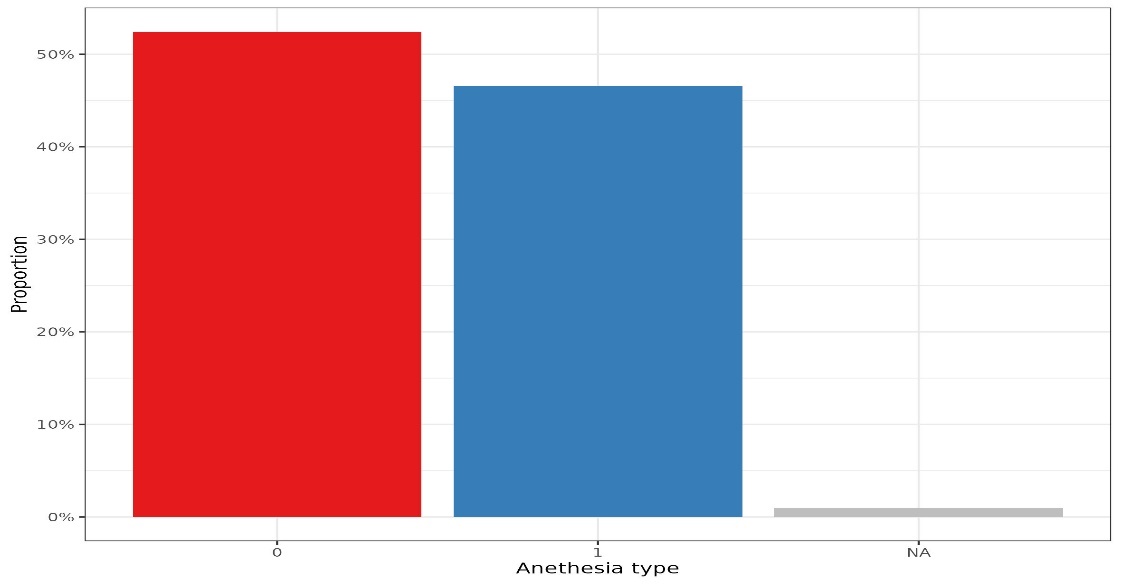
Out of 102 patients who underwent gynecological laparoscopic surgery, 48 patients received General Anesthesia (GA) (47.1%), and 54 patients received Spinal Anesthesia (SA) (52.9%). Figure 1.
Clinical Characteristics by Anesthesia Type
Clinical characteristics are summarized in Table 1. Age, weight, and height were similar between SA and GA, with no statistically significant differences (all p > 0.05). Preoperative physical status was mainly ASA I and ASA II in both groups, and their distribution did not differ significantly. The prevalence of asthma, diabetes, and hypertension was low and comparable between anesthesia techniques (all p > 0.05). Airway assessment showed that most patients were classified as Mallampati class I in both groups, with no significant difference in Mallampati distribution (p = 0.84). Overall, demographic profile, comorbidities, ASA classification, and airway characteristics were evenly distributed between the two anesthesia types.
| Variable | SA (n = 54) | GA (n = 48) | Total (n) | p-value |
| Age, mean (SD) | 38.7 (8.66) | 37.3 (8.67) | 102 | 0.43 |
| Weight (kg), mean (SD) | 77.4 (9.27) | 79.0 (10.1) | 102 | 0.40 |
| Height (cm), mean (SD) | 165 (6.07) | 166 (6.25) | 102 | 0.71 |
| ASA class, n (%) | 0.45 | |||
| I | 38 (70%) | 33 (69%) | 71 | – |
| II | 16 (30%) | 13 (27%) | 29 | – |
| III | 0 (0%) | 2 (4.2%) | 2 | – |
| Asthma, n (%) | 0.33 | |||
| No | 47 (87%) | 45 (94%) | 92 | – |
| Yes | 7 (13%) | 3 (6.2%) | 10 | – |
| Diabetes, n (%) | 0.62 | |||
| No | 51 (94%) | 47 (98%) | 98 | – |
| Yes | 3 (5.6%) | 1 (2.1%) | 4 | – |
| Hypertension, n (%) | 0.51 | |||
| No | 46 (85%) | 43 (90%) | 89 | – |
| Yes | 8 (15%) | 5 (10%) | 13 | – |
| Mallampati class, n (%) | 0.84 | |||
| I | 43 (80%) | 37 (77%) | 80 | – |
| II | 9 (17%) | 9 (19%) | 18 | – |
| III | 2 (3.7%) | 1 (2.1%) | 3 | – |
Biological Characteristics and Arterial Blood Gases by Anesthesia Type
Biological parameters are summarized in Table 2. Bicarbonate, hemoglobin, international normalized ratio (INR), partial pressure of carbon dioxide (PCO₂), pH, partial pressure of oxygen (PO₂), activated partial thromboplastin time (aPTT), and prothrombin time (PT) were similar between the SA and GA groups, with no statistically significant differences, indicating comparable metabolic, hematologic, and respiratory profiles at baseline.
| Parameter | SA (n = 54) | GA (n = 48) | Total (n) | p-value |
| HCO₃, mean (SD) | 23.3 (2.03) | 23.2 (0.71) | 102 | 0.62 |
| Hemoglobin, mean (SD) | 12.7 (0.93) | 12.8 (1.96) | 102 | 0.70 |
| INR, mean (SD) | 1.02 (0.039) | 3.16 (14.9) | 102 | 0.32 |
| PCO₂, mean (SD) | 36.8 (1.46) | 37.1 (1.09) | 102 | 0.18 |
| pH, mean (SD) | 7.38 (0.020) | 7.38 (0.017) | 102 | 0.65 |
| PO₂, mean (SD) | 88.0 (2.94) | 87.8 (2.77) | 102 | 0.70 |
| aPTT, mean (SD) | 1.11 (1.06) | 1.02 (0.070) | 102 | 0.51 |
| PT, mean (SD) | 87.0 (4.71) | 87.5 (4.73) | 102 | 0.63 |
Legend:SA = Values are presented as mean (standard deviation). HCO₃: bicarbonate; INR: international normalized ratio; PCO₂: partial pressure of carbon dioxide; PO₂: partial pressure of oxygen; aPTT: activated partial thromboplastin time; PT: prothrombin time; SA: spinal anesthesia; GA: general anesthesia.
Anesthetic Characteristics by Type of Anesthesia
Anesthetic characteristics are summarized in Table 3. Anesthesia duration differed significantly between SA and GA groups, with most GA cases lasting less than 1 hour (25%) compared with SA (5.6%; p < 0.01). The duration of stay in the post-anesthesia care unit (PACU), whether ≤ 2 hours or > 2 hours, was similar for both SA and GA groups (p = 0.60 and p = 0.51, respectively). Conversion from spinal to general anesthesia occurred in 5.6% of SA cases, while no GA cases required conversion; this difference was not statistically significant (p = 0.25). Overall, PACU stay, and conversion rates were comparable, despite significant differences in anesthesia duration.
| Variable | SA (n = 54) | GA (n = 48) | Total (n) | p-value |
| Anaesthesia duration | <0.01 | |||
| <1 h | 3 (5.6%) | 12 (25%) | 15 | |
| >1 h | 51 (94%) | 36 (75%) | 87 | |
| PACU stay > 2 h | 0.51 | |||
| No | 4 (7.4%) | 6 (12%) | 10 | |
| Yes | 50 (93%) | 42 (88%) | 92 | |
| PACU stay ≤ 2 h | 0.60 | |||
| No | 5 (9.3%) | 6 (12%) | 11 | |
| Yes | 49 (91%) | 42 (88%) | 91 | |
| Conversion from SA to GA | 0.25 | |||
| No | 51 (94%) | 48 (100%) | 99 | |
| Yes | 3 (5.6%) | 0 (0%) | 3 |
Legend: PACU: post-anesthesia care unit; SA: spinal anesthesia; GA: general anesthesia.
Surgical Characteristics by Anaesthesia Type
Surgical characteristics are summarized in Table 4. The proportion of patients with previous surgery, planned surgery, and urgent surgery was similar between the SA and GA groups, with no statistically significant differences. Surgery duration >1 hour occurred in 37% of SA cases and 50% of GA cases, without significant difference (p = 0.19). The most frequent surgical indications in both groups were laparoscopy (37% SA vs. 44% GA) and myomectomy (15% SA vs. 19% GA). Other procedures—including tuboplasty, hysterectomy, ectopic pregnancy management, adenomyosis excision, cystectomy, adhesiolysis, and tubal ligation—were less frequent and evenly distributed between groups.
| Variable | SA (n = 54) | GA (n = 48) | Total (n) | p-value |
| Previoussurgery | 0.19 | |||
| No | 35 (65%) | 25 (52%) | 60 | |
| Yes | 19 (35%) | 23 (48%) | 42 | |
| Plannedsurgery | 0.071 | |||
| No | 3 (5.6%) | 8 (17%) | 11 | |
| Yes | 51 (94%) | 40 (83%) | 91 | |
| Urgent surgery | 1.00 | |||
| No | 51 (94%) | 45 (94%) | 96 | |
| Yes | 3 (5.6%) | 3 (6.2%) | 6 | |
| Surgery duration >1 h | 0.19 | |||
| No | 34 (63%) | 24 (50%) | 58 | |
| Yes | 20 (37%) | 24 (50%) | 44 | |
| Surgical indications | 0.89 | |||
| Laparoscopy | 20 (37%) | 21 (44%) | 41 | |
| Myomectomy | 8 (15%) | 9 (19%) | 17 | |
| Tuboplasty | 9 (17%) | 4 (8.3%) | 13 | |
| Hysterectomy | 7 (13%) | 4 (8.3%) | 11 | |
| Ectopicpregnancy | 4 (7.4%) | 2 (4.2%) | 6 | |
| Adenomyosis excision | 2 (3.7%) | 3 (6.2%) | 5 | |
| Cystectomy | 2 (3.7%) | 2 (4.2%) | 4 | |
| Adhesiolysis | 1 (1.9%) | 2 (4.2%) | 3 | |
| Tubal ligation | 1 (1.9%) | 1 (2.1%) | 2 |
Anaesthetic and Perioperative Complications by Anaesthesia Type
Anesthetic and perioperative complications are summarized in Table 5. Bradycardia (heart rate <60 bpm) was more frequent in the SA group (33%) than in the GA group (2.1%; p < 0.001). Post-spinal headache occurred in 1 SA patient (1.9%) and none in GA. Surgical pain, assessed by Visual Analog Scale (VAS >3/10) at 1, 12, and 24 hours (H1, H12, H24), was comparable, with slightly higher pain at H1 in GA (23% vs. 9.4%; p = 0.064). Scapular pain (shoulder pain related to pneumoperitoneum), hemorrhage requiring transfusion, and postoperative nausea and vomiting (PONV) were similar between groups. Hypotension (systolic BP <90 mmHg) was more frequent in GA (25% vs. 7.4%; p = 0.015). Overall, SA was associated with higher bradycardia, GA with higher hypotension, while other complications and postoperative discomfort were comparable.
| Variable | SA (n = 54) | GA (n = 48) | Total (n) | p-value |
| Bradycardia | <0.001 | |||
| No | 36 (67%) | 47 (98%) | 83 | |
| Yes | 18 (33%) | 1 (2.1%) | 19 | |
| Post-spinal headache | 1.00 | |||
| No | 53 (98%) | 48 (100%) | 101 | |
| Yes | 1 (1.9%) | 0 (0%) | 1 | |
| Surgical pain (VAS>3/10) H1 | 0.064 | |||
| No | 48 (91%) | 37 (77%) | 85 | |
| Yes | 5 (9.4%) | 11 (23%) | 16 | |
| Surgical pain (VAS >3/10) H12 | 0.31 | |||
| No | 46 (87%) | 38 (79%) | 84 | |
| Yes | 7 (13%) | 10 (21%) | 17 | |
| Surgical pain (VAS >3/10) H24 | 0.34 | |||
| No | 52 (98%) | 45 (94%) | 97 | |
| Yes | 1 (1.9%) | 3 (6.2%) | 4 | |
| Scapular pain (VAS >3/10) H1 | 0.16 | |||
| No | 49 (92%) | 40 (83%) | 89 | |
| Yes | 4 (7.5%) | 8 (17%) | 12 | |
| Scapular pain (VAS >3/10) H12 | 1.00 | |||
| No | 52 (98%) | 47 (98%) | 99 | |
| Yes | 1 (1.9%) | 1 (2.1%) | 2 | |
| Haemorrhage/transfusion | 0.66 | |||
| No | 52 (96%) | 45 (94%) | 97 | |
| Yes | 2 (3.7%) | 3 (6.2%) | 5 | |
| Hypotension | 0.015 | |||
| No | 50 (93%) | 36 (75%) | 86 | |
| Yes | 4 (7.4%) | 12 (25%) | 16 | |
| PONV H1 | 0.42 | |||
| No | 48 (91%) | 41 (85%) | 89 | |
| Yes | 5 (9.4%) | 7 (15%) | 12 | |
| PONV H12 | 0.15 | |||
| No | 51 (96%) | 42 (88%) | 93 | |
| Yes | 2 (3.8%) | 6 (12%) | 8 | |
| PONV H24 | 1.00 | |||
| No | 50 (94%) | 45 (94%) | 95 | |
| Yes | 3 (5.7%) | 3 (6.2%) | 6 |
Legend: Values are presented as number (percentage). VAS: Visual Analog Scale; PONV: postoperative nausea and vomiting; SA: spinal anesthesia; GA: general anesthesia. H1, H12, H24: 1, 12, and 24 hours after surgery.
Association betweenAnaesthesia Type and Perioperative Complications
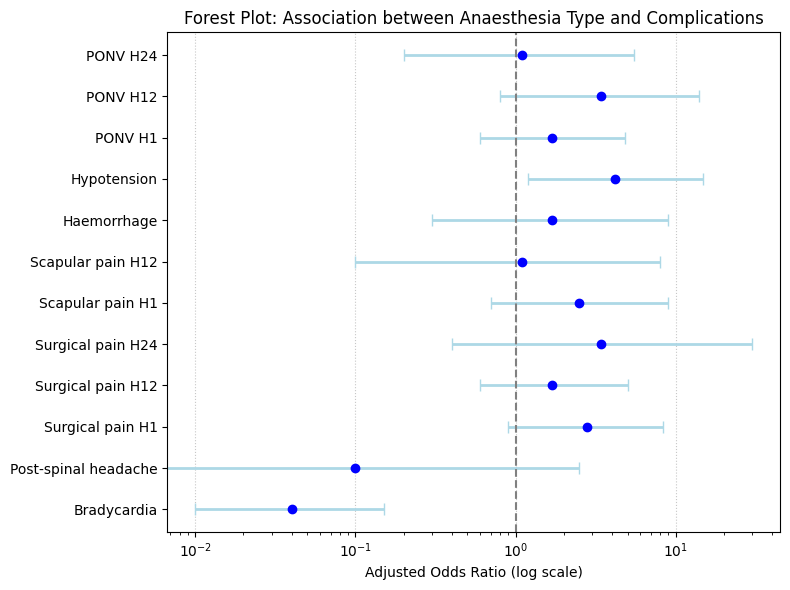
Figure 2 illustrates the association between anesthesia type and perioperative complications. SA was independently associated with a higher risk of bradycardia (heart rate <60 beats per minute; odds ratio [OR] 0.04; 95% confidence interval [CI] 0.01–0.15), while GA was associated with a higher risk of hypotension (systolic blood pressure <90 mmHg; OR 4.2; 95% CI 1.2–14.8). Other complications—including post-spinal headache, surgical pain assessed by Visual Analog Scale (VAS >3/10) at 1, 12, and 24 hours (H1, H12, H24), scapular pain (shoulder pain related to pneumoperitoneum), hemorrhage requiring transfusion, and postoperative nausea and vomiting (PONV) at H1, H12, and H24—showed no significant association with anesthesia type, as their confidence intervals crossed 1. Overall, this analysis indicates that the type of anesthesia is an independent predictor of selected hemodynamic complications, while most postoperative pain and nausea outcomes are not significantly affected.
Discussion
This cross-sectional study evaluated the clinical, biological, anesthetic, surgical, and perioperative characteristics of 102 patients undergoing gynecological laparoscopic surgery under either spinal anesthesia (SA) or general anesthesia (GA). Overall, our findings demonstrate that both anesthesia techniques are safe and feasible, with specific differences in selected hemodynamic complications.
The demographic and clinical characteristics were similar between the SA and GA groups, including age, weight, height, ASA classification, comorbidities, and airway assessment. This comparability ensures that observed differences in perioperative outcomes are unlikely to be confounded by baseline patient characteristics. These findings are consistent with previous studies showing no significant demographic or comorbidity differences between patients receiving SA or GA for laparoscopic procedures [4-7].
Biological and arterial blood gas parameters were comparable at baseline, suggesting similar metabolic, hematologic, and respiratory profiles prior to anesthesia. This homogeneity supports the internal validity of the study and indicates that perioperative differences can be attributed primarily to the type of anesthesia rather than pre-existing physiological disparities.
In terms of anesthetic and surgical characteristics, the duration of anesthesia differed significantly, with GA procedures more frequently lasting less than one hour. Despite this, PACU stay and conversion rates from SA to GA were similar, indicating that both anesthesia techniques provide stable perioperative management. Surgical characteristics, including previous surgery, urgency, and specific surgical procedures, were evenly distributed between groups, reinforcing the comparability of the cohorts.
Our findings on perioperative complications highlight key differences between SA and GA. Bradycardia was significantly more frequent in patients receiving SA, whereas hypotension occurred more often under GA. These findings correspond with the established physiological consequences of spinal blockade, which can induce sympathetic inhibition and bradycardia, as well as the systemic vasodilatory and myocardial depressant effects of general anesthesia, potentially leading to hypotension [8-10]. Other complications, including post-spinal headache, surgical pain at H1, H12, and H24, scapular pain, hemorrhage requiring transfusion, and postoperative nausea and vomiting, did not differ significantly between groups, suggesting that overall perioperative morbidity is low and comparable.
The multivariable logistic regression analysis confirmed that anesthesia type independently predicts selected hemodynamic complications, with SA associated with bradycardia and GA with hypotension, while most other postoperative outcomes were unaffected. These findings provide clinically relevant information for anesthesiologists in tailoring anesthesia choice based on patient cardiovascular risk and surgical context [11-13].
Limitations of this study include its retrospective cross-sectional design, which limits causal inference, and the single-center setting, which may affect generalizability. However, the rigorous selection of participants, standardized data collection, and adjustment for potential confounders strengthen the validity of the conclusions. Future prospective studies with larger sample sizes and multicenter designs are warranted to confirm these findings and explore additional outcomes such as long-term recovery and patient satisfaction.
In conclusion, both spinal and general anesthesia are safe for gynecological laparoscopic surgery, with SA associated with higher bradycardia and GA with higher hypotension. Patient characteristics, surgical factors, and most perioperative complications were comparable, supporting the tailored use of anesthesia based on individual risk profiles and surgical requirements.
Declarations
Funding
This study received no specific funding from any public, commercial, or not-for-profit organization.
Competing interests
The authors declare no competing interests.
Author contributions
Concept: E.N., A.M.B., E.Nz., J.O.; Methodology: E.N., A.M.B., W.M., K.A.; Data curation: E.N., A.M.B., E.Nz., J.O., W.M., K.A., A.Mu., T.M.; Formal analysis: E.N., A.M.B., M.K.; Investigation: All authors; Writing – original draft: E.N., A.M.B.; Writing – review & editing: All authors; Supervision: R.S., M.B., B.B.; Project administration: E.N., M.K.; Funding acquisition: Not applicable. All authors approved the final manuscript and are accountable for all aspects of the work.
Acknowledgements
The authors thank Clinique d’Or for support.
Consent for publication
Not applicable.
Availability of data and materials
All data generated or analyzed during this study are included in this article. Additional data are available from the corresponding author upon reasonable request.