Introduction
Ayurveda, literally meaning ‘science of life’, is an ancient Indian system of medicine that practiced about 3500 years ago. Ayurveda system relies strongly on preventive medicine and promotion of health [1-3].Among its vast pharmacopeia, Semicarpus anacardium Linn (SA), commonly known as Bhallathaka, has emerged as a potent herbal remedy. SA is a deciduous tree distributed in the sub-Himalayan tract and in tropical parts of India [4]; (Family: Anacardiaceae). It has high priority and applicability in indigenous system of medicine. SA also called as “marking nuts” contains many compounds like biflavanoids, which include semicarpuflavanone, jeediflavonone, galluflavanone and also some phenolic compounds like bhilawanols, sterols and glycosides. The bhilawanol, a catechol derivative and monohydroxy phenol called ‘semecarpol’ was also isolated from the nuts [5]. This plant, classified under Upavisha, is recognized for its therapeutic potential but presents challenges due to its inherent toxicity, earning it the designation of Sthavara Visha in Ayurveda. It is an organic irritant vegetable poison known for inducing dermatitis upon contact [6,7]. Despite its toxic nature, Ayurveda and Siddha systems of medicine extensively utilize Bhallathaka for therapeutic purposes, subjecting it to Shodhana Samskara, a purification process. Through this process, the toxic components are mitigated, rendering the plant suitable for medicinal applications. Research has demonstrated its diverse therapeutic benefits, ranging from antiatherogenic and anti-inflammatory properties to antimicrobial and anti-carcinogenic activities [8]. The plant finds extensive use in Ayurvedic formulations, contributing to the treatment of conditions such as Kushta, Arshas, and Gulma. [9].
This study aims to explore the standardization of BhallathakaShodhana, emphasizing acute toxicity studies. Its inclusion in groups like Upavisha highlights its potential as a semipoisonous substance, demanding judicious usage [10]. Shodhana involves essential changes in Bhallathaka, notably in its chemical composition. The unprocessed form, Ashodhita Bhallathaka, contains high levels of anacardic acid, a toxic urushiol, along with other compounds like cardol. Through Shodhana, the conversion of anacardic acid into less toxic anacardol occurs, accompanied by changes in the overall chemical profile of the plant [11]. Limited research has been conducted on the purification methods (Sodhana) applied to marking nut, particularly in assessing its phytochemical and physiochemical properties as well as toxicity studies.
The novelty of our study lies in investigating the physiochemical and phytochemical changes induced by six purification methods, along with a folkloric purification approach, aiming to enhance the potency, safety, and effectiveness of the drug. Subsequent toxicity studies were conducted to further elucidate the impact of these purification techniques, filling a gap in the understanding of Sodhana's effects on medicinal substances.
Methods
Plant material
The drug was procured from the geographical locale of Mayyil in the Kannur district of Kerala, India. The validation of the botanical identity of this specimen was undertaken by proficient botanists by Dr. C I Joly affiliated with the Amala Ayurveda Hospital and Research Center situated in Thrissur. The purification processes, adhering strictly to classical references and traditional folk methodologies, were systematically executed at the aforementioned research center, ensuring the utmost precision and compliance with scientific standards.
Chemicals
The procurement of chemicals required for the phytochemical analysis was facilitated through MEGHA Chemicals, Udupi, India. Six distinct purification methods for Bhallataka(Semecarpus anacardium Linn.) were employed, based on references from Charaka Samhita,[12] Sushrutha Samhita,[13] Raja Nighantu, [14] Rasamritham,[15] Arogyakalpadrumam,[16] Sahasrayoga,[17] and a folklore method, each involving specific procedures and ingredients, with the goal of standardizing the shodhana process for safe incorporation into Ayurveda formulations.
Purification Methods
In the initial purification methods outlined in Charaka Samhita for Group 1 and Sushruta Samhita Group-2, 500g of ripe Bhallataka fruits are collected during specific months, subjected to water submersion for the selection of sinking fruits, thalamus portions are removed, the fruits are halved, and then stored in a Yava or Masha grain heap for four months before being collected and weighed, aligning with traditional practices from ancient Indian medicinal texts. Ripened Bhallataka fruits underwent various purification methods: soaking in water and collecting sinking fruits, rubbing with Ishtika choorna, washing, and drying (Group 3); immersion in Gomutra followed by cow's milk, washing, drying, and sunlight exposure (Group 4); crushing, soaking in Gomutra, boiling with Vibhitaki moola twak kashaya, drying, boiling with Gomaya swarasa, washing with Kanjika, and drying (Group 5); removal of thalamus portion, immersion in Gomaya swarasa, washing, soaking in Narikela jala, and drying (Group 6); and boiling with Tila taila and Godugdha until dry, washing, and drying (Group 7; folklore method).
Pharmacognostic evaluation
Different organoleptic (sensory) parameters of a drug such as colour, odour, taste and texture were evaluated by the sense organs and recorded [18,19]. For the identification of various phytochemical constituents, the 7 groups and one control group were subjected to qualitative tests as per the standard procedure. The phytochemical constituents analysed were alkaloids, glycosides, saponins, flavanoids, steroids, terpanoids. Reducing sugar and heavy metals were also analysed [20].
Physicochemical evaluation of S. anacardium nut
The parameters studied were foreign matter, loss on drying, PH value, total ash, acidinsoluble ash, water, alcohol and chloroform extractive values.
Selection and Procurement of animals
Sprague Dawley rats (25–30 g) were purchased from the Small Animal Breeding Station (SABS), College of Veterinary, KVASU, Thrissur, Kerala. The animals were kept in the animal house facility of Amala Cancer Research Centre, Thrissur, Kerala, India, following standard conditions of 24–28 °C, 60–70% humidity, 12 h dark/light cycle and fed with standard rat feed bought from Sai Durga Feeds, Bangalore, India and water ad libitum. All the animal experiments were carried out with the prior permission of the Institutional Animal Ethics Committee (IAEC) and were conducted strictly according to the guidelines of the Committee for the Purpose of Control and Supervision of Experiments on Animals (CPCSEA) constituted by the Ministry of Environment and Forest, Government of India.
Acute toxicity
The animals were divided into 7 groups (randomized by initial body weight) with each cage containing 6 rats of the same sex. The animal groups were further subdivided into cages housing three individuals each. Subsequently, the animals orally received single doses of purified drug at a dose of 2 gram per kilogram of body weight and 1 gm/kg of body weight to the cage 1 and cage 2, respectively. Control group will be given with ashuddha Bhallataka(non- purified) and rest all groups will be given with purified Bhallataka.
The animals were kept in respective labelled cages with feeding bottles and observed continuously for first two hours. Then they were watched occasionally for the next 4 hours and again for the next 24hrs. The observation was done next 10 days. The animals were monitored for clinical and behavioural symptoms such as watery stool, immobility, neuromuscular problems, mortality, and any adverse reactions. The body weight of each rat was recorded by 3 days intervals throughout the course of the study and mean body weights were calculated. The quantity of food and water consumed by groups consisting of 6 rats were recorded every 3 days and the food consumption per rat was calculated for all the groups. After 10th day the animals were sacrificed under light ether anesthesia.
Blood was collected by direct heart puncture method. A part of the blood was collected in heparinized tubes and used for the determination of hematological parameters and the other part was collected in nonheparinized tubes and used for serum chemistry analysis. Necropsy was performed in all animals in the presence of a veterinary pathologist and observations were recorded. The organ weights were recorded as absolute values and their relative values (ie, percentage of the body weight) were calculated.
Blood samples were analyzed for hematological parameters (total erythrocyte count [RBC], hemoglobin, platelet, and total and differential leukocyte counts). Total white blood cells were measured after diluting the blood in Turk fluid and counted using ahemocytometer [21]. For differential leukocyte count, blood smears were prepared on a clean glass slide, stained with Leishman stain and various types of cells were counted manually with a microscope [22]. Platelet count was determined by diluting the blood with Rees Ecker diluting fluid and counted using a hemocytometer. Total RBC count was measured by diluting the blood with Dacie fluid and counted using a counting chamber. Hemoglobin content (Hb) was measured by cyanmethemoglobin (Drabkin) method using the kit from Agappe Diagnostics, Thane, India.
Blood collected in nonheparinized tubes were centrifuged at 5000 rpm for 10 minutes. The clear serum obtained was used for the following investigations: Aspartate aminotransferase (AST) and alanine aminotransferase (ALT) were estimated by the IFCC (International Federation of Clinical Chemistry) kinetic method and alkaline phosphatase (ALP) by PNNP (p- nitrophenyl phosphate) hydrolysis method with kits supplied by Raichem Lifesciences Pvt. Ltd., Mumbai, India, using a Merck Microlab 300 Analyzer from Systronics (India) Limited, Ahmedabad, India. The liver and kidney profile markers were estimated using commercially available kits supplied by Piramal Healthcare Limited, Navi Mumbai, India. A portion of selected tissues such as stomach and intestine of groups 1, 2, 7 and control of animals treated with 2 g/kg were fixed in 10% neutral buffered formalin. Tissue sections were taken and stained with hematoxylin-eosin and observed under high power (×40).
Statistical Analysis
All data were expressed as Mean±SD (standard deviation). The statistical analysis was done by one way ANOVA (Tukey) using Graph pad InStat version 3.00 for Windows 98, Graph pad software, San Diego, California, USA.P-value considered as significant are indicated by “*” “**” and “***” for p<0.05, p<0.01 and p<0.001 respectively.
Results
BhallatakaShodhana methods
The results presented in Table 1 demonstrate that the purified yield of Bhallataka fruits varied between 325gms to 405gms across different purification methods. These findings offer valuable insights into the efficacy of various purification techniques, facilitating standardization endeavors for future research and development in the field.
| Groups | Weight before purification | Weight after purification |
| Group 1 & 2 | 500 gm | 480 gm |
| Group 3 | 500 gm | 325 gm |
| Group 4 | 500 gm | 350 gm |
| Group 5 | 500 gm | 325 gm |
| Group 6 | 500 gm | 370 gm |
| Group 7 | 500 gm | 405 gm |
Pharmacognostical study
The organoleptic evaluation of the Bhallatakafruit samples yielded the following results; the dry powder exhibited a predominantly astringent taste with a secondary sweet after taste, displayed a brown hue, and was characterized by a pleasant aroma, while presenting a coarse texture seen in group 1 and 2. Similarly, the dry powder showcased a primarily astringent taste with a mild sweetness, displayed a blackish brown coloration, featured a pleasant aroma, and exhibited a coarse texture in group 3. Additionally, group 4 showed that the dry powder suggested a predominantly astringent taste with an odor reminiscent of cow’s urine, displayed a blackish-brown hue, was characterized by an unusual aroma resembling cow’s urine, and showed a coarse texture. In another group 5, the dry powder indicated a predominantly astringent taste, presented a black coloration, featured a pleasant aroma, and displayed a coarse texture. Furthermore, the dry powder suggested a predominantly astringent taste with an aroma resembling cow’s urine, exhibited a greyish-black coloration, was characterized by an aroma similar to cow’s urine, and showcased a coarse texture in group 6. Finally, in group 7, the dry powder revealed an astringent taste with an odor reminiscent of ash, displayed a black coloration, featured an aroma similar to ash, and showed a coarse texture (Table 2).
| Sample | Colour | Odour | texture |
| Group 1&2 | Brown | Pleasant smell | Coarse |
| Group 3 | Blackish-Brown | Pleasant smell | Coarse |
| Group 4 | Blackish-Brown | Cows urine | Coarse |
| Group 5 | Black | Pleasant smell | Coarse |
| Group 6 | Greish -Black | Cows urine | Coarse |
| Group 7 | Black | Smell of ash | Coarse |
phytochemical analysis of different extracts of Ballataka
Our phytochemical screening of the drug revealed the presence of tannins, carbohydrates, terpanoids and glycosides (Table 3). The phytochemical analysis of Bhallataka samples revealed that all samples contained foreign matter within the prescribed limit of below 1%. Group 3 exhibited a slightly higher loss on drying compared to the control group, with values ranging between 5.82% to 7.92% across groups. Acidic pH values were observed in all samples, with values higher than 11%, indicating acceptable acidity levels. Groups 3, 4, and 5 showed significantly higher chloroform soluble extractive values compared to the control group. Volatile oil percentage was found to be 0% in all samples. Except for the control group and Group 4, all other groups exhibited higher total ash values, with Group 7 showing the highest value. Acid insoluble ash values were higher in all groups compared to the control group, exceeding the API guidelines of below 0.5%. Group 7 displayed substantially higher water soluble ash values compared to other groups. Except for Groups 3 and 4, all other groups exhibited higher water soluble extractive values compared to the control group, with values exceeding 5%. With the exception of Groups 1&2 and 6, all groups showed higher alcohol soluble extractive values compared to the control group (Table 4). All samples contained heavy or toxic metals within acceptable limits, suggesting minimal soil contamination in the growing areas (Data not shown).
| Test | Alcoholic extract | Chloroform extract | Water extract | ||||||||||||||||||
| CG | G1 & G2 | G3 | G4 | G5 | G6 | G7 | CG | G1 & G2 | G3 | G4 | G5 | G6 | G7 | CG | G1 & G2 | G3 | G4 | G5 | G6 | G7 | |
| Saponi ns | - | - | - | - | - | - | - | - | - | - | - | - | - | - | - | - | - | - | - | - | - |
| Tanni ns | + | + | + | + | + | + | + | - | - | - | - | - | - | - | - | - | - | - | - | - | - |
| Flavonoids | - | - | - | - | - | - | - | - | - | - | - | - | - | - | - | - | - | - | - | - | - |
| Steroids | - | - | - | - | - | - | - | - | - | - | - | - | - | - | - | - | - | - | - | - | - |
| Cardiac Glycosides | + | + | + | + | + | + | + | - | - | - | - | - | - | - | - | - | - | - | - | - | - |
| Terpenoids | + | + | + | + | + | + | + | + | + | + | + | + | + | + | + | + | + | + | + | + | + |
| Alkaloids | - | - | - | - | - | - | - | - | - | - | - | - | - | - | - | - | - | - | - | - | - |
| Reducing Sugar | + | + | + | + | + | + | + | + | + | + | + | + | + | + | + | + | + | + | + | + | + |
| Test for Starch | - | - | - | - | - | - | - | - | - | - | - | - | - | - | - | - | - | - | - | - | - |
(-) indicates absence and (+) indicates presence
| Group | Foreign matter% | Loss on drying% | PHvalue | Total ash% | Acid insoluble ash % | Watersolubleash % | WaterSolubleextractivevalue% | Alcoholsolubleextractivevalue% | ChloroformSolubleExtractive Value% | Vola tile oil% |
| Control Group | 0.9 | 6.193 | 5.11 | 1.95 | 0.212 | 2.503 | 5.99 | 15.19 | 14.162 | 0 |
| Group 1 & 2 | 0.78 | 6.513 | 5.58 | 5.57 | 0.960 | 3.761 | 6.60 | 12.69 | 6.703 | 0 |
| Group 3 | 1 | 7.924 | 5.06 | 7.79 | 2.47 | 0.179 | 5.88 | 17.06 | 24.522 | 0 |
| Group 4 | 0 | 5.821 | 4.74 | 2.50 | 0.625 | 0.6 | 2.08 | 15.07 | 25.691 | 0 |
| Group 5 | 0.92 | 5.981 | 5.96 | 5.86 | 0.804 | 3.918 | 2.37 | 21.96 | 23.814 | 0 |
| Group 6 | 0.08 | 6.301 | 5.70 | 10.2 | 1.065 | 7.451 | 9.68 | 14.47 | 13.51 | 0 |
| Group 7 | 0.84 | 6.443 | 5.27 | 80.7 | 1.555 | 77.418 | 9.16 | 18.46 | 21.20 | 0 |
Acute Toxicity
Effect of Bhallataka (Purified and Non-purified) on mortality of animals
No mortality occurred in any of the experimental groups following the administration of both purified and non-purified Bhallataka fruits at dosages of 2gm/kg and 1gm/kg body weight, respectively (Data not shown).
Effect of Bhallataka (purified and non- purified) on behavioral changes in rats
The impact of purified and non-purified Bhallataka fruits on behavioral alterations in rats was investigated. During the initial 24-hour period and throughout the subsequent 10-day observational phase, no discernible aberrations in behavior were observed among the subjects under study (Results not shown). No abnormal changes were noticed on skin, fur and eyes of rats during first 24hrs and then for next 10 days of the study.
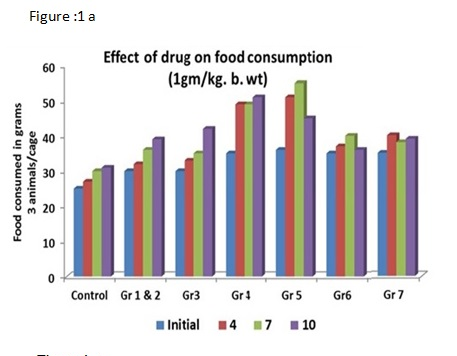
Effect of Bhallataka (Purified and Non-purified) on food consumption of animals (1gm/kg b.wt)
Significant increases in food consumption were noted in Groups 3, 4, 5, and 6 compared to the control group. Conversely, no notable changes in food consumption were observed in Groups 1, 2, and 7 relative to the control group (Figure1a).
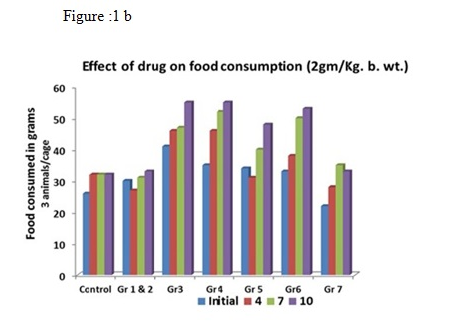
Effect of Bhallataka(purified and non- purified) on food consumption in rats (2gm/kg b.wt)
A substantial rise in food intake was evident in Groups 3, 4, 5, and 6 compared to the control group. Conversely, Groups 1, 2, and 7 exhibited no significant alterations in food consumption relative to the control group (Figure1b).
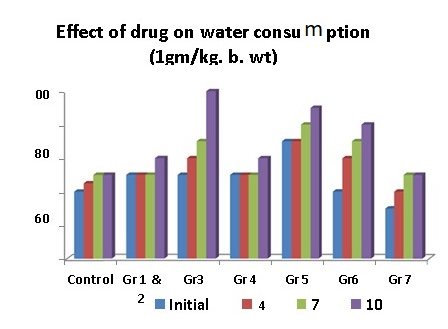
Effect of Bhallataka (Purified and Non-purified) on water consumption of animals ((1gm/kg b.wt)
Significant increases in water consumption were observed in Groups 3, 4, 5, and 6 compared to the control group. Conversely, no significant changes in water consumption were noted in Groups 1, 2, and 7 when compared with the control group (Figure 1c).
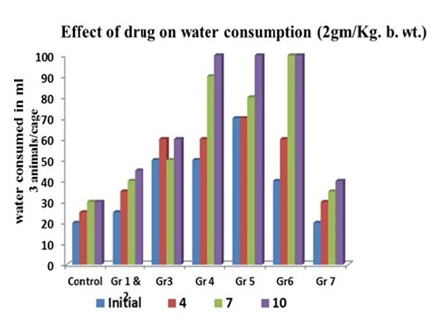
Effect of Bhallataka (purified and non- purified) on water consumption in rats (2gm/kg b.wt)
Significant increases in water consumption were observed in Groups 3, 4, 5, and 6 compared to the control group, indicating statistical significance. In contrast, Groups 1, 2, and 7 showed no significant changes in water intake compared to the control group (Figure1d).
Effect of Bhallataka (Purified and Non-purified) on Body weight of animals
No significant changes in body weight were observed in animals from Groups 1&2, 3, 4, 5, 6, and 7 compared to the control group (Data not shown).
Effect of Bhallataka on Necropsy of animals
In the control group (Non-purified Bhallataka fruits), all animals exhibited inflamed stomachs and constricted areas of the small intestine. However, no other organs displayed pathological abnormalities. In Group 1&2 (purified Bhallataka fruits), some animals showed constricted areas of the small intestine, while all other organs appeared normal. Group 3, 4, 5, and 6 (purified Bhallataka fruits) showed no pathological abnormalities in organ necropsy. However, in Group 7 (purified Bhallataka fruits), all animals exhibited inflamed small intestines (data not shown).
Effect of Bhallataka on Biochemical and haematological parameters
Serum Glutamate Oxaloacetate Transaminase (SGOT), Serum Glutamate Pyruvate Transaminase (SGPT), and Alkaline Phosphatase (ALP) levels, indicative of liver function, remained within normal limits in the control group, with no significant elevation observed in other groups, suggesting preserved liver function post-drug administration. Similarly, serum creatinine and urea levels, markers of kidney function, showed no significant differences compared to the control group, indicating no renal toxicity from Bhallataka fruit administration at 1 gm/kg and 2gm/kg body weight (Table 5 & Table 6). Hematological parameters, including Hb, Total RBC, and Platelet count, remained unchanged post-administration, while slight elevations in ESR and Total WBC count in Group 1&2 and Group 7 indicated mild inflammation (Table 7).
| Group | Drug | Dose (mg/kg b.wt) | SGOT(u/l) | SGPT(u/l) | ALP(Iu/l) | Total bilirubin(mg/dl) |
| Control group | Non purified Bhallataka | 2gm/kg | 60.02±21.1 | 40.12±10.2 | 150.13±15.2 | 0.7±0.02 |
| 1gm/kg | 62.02±20.1 | 45.12±11.3 | 150.13±15.2 | 0.7±0.02 | ||
| Group 1&2 | Purified Bhallataka | 2gm/kg | 62.02±15.1 | 48.12± 13.8 | 145.14±16.3 | 0.6±0.05 |
| 1gm/kg | 67.02±13.1 | 45.12± 12.8 | 150.14±14.3 | 0.7±0.05 | ||
| Group 3 | Purified Bhallataka | 2gm/kg | 50.23±10.2 | 35.12±12.1 | 140.27±12.2 | 0.5±0.05 |
| 1gm/kg | 60.23±10.2 | 38.12± 13.3 | 140.27±10.4 | 0.6±0.07 | ||
| Group 4 | Purified Bhallataka | 2gm/kg | 55.37±11.2 | 37.23± 10.2 | 142.81±13.2 | 0.6±0.07 |
| 1gm/kg | 57.37±12.2 | 38.23± 11.2 | 148.81±12.2 | 0.6±0.06 | ||
| Group 5 | Purified Bhallataka | 2gm/kg | 57.81±11.4 | 36.15± 10.4 | 141.22±16.2 | 0.6±0.05 |
| 1gm/kg | 57.81±11.4 | 36.15± 10.4 | 141.22±16.2 | 0.6±0.05 | ||
| Group 6 | Purified Bhallataka | 2gm/kg | 54.21±10.4 | 38.16± 9.3 | 142.92±14.2 | 0.6±0.04 |
| 1gm/kg | 60.23±10.2 | 38.12± 13.3 | 140.27±10.4 | 0.6±0.07 | ||
| Group 7 | Purified Bhallataka | 2gm/kg | 65.21±23.2 | 50.12± 12.7 | 152.13±17.3 | 0.6±0.05 |
| 1gm/kg | 67.02±13.1 | 45.12± 12.8 | 150.14±14.3 | 0.7±0.05 |
Values are Mean±S.D, P = Non significant (P>0.05), SGOT – Serum glutamate Oxalo acetate transaminase, SGPT – Serum glutamate pyruvate transaminase, ALP - Alkaline phosphatase. 7 purified drug groups and control drug administerdrats serum enzymes analysed and expressed in IU/L
| Group | Drug | Dose (mg/kg. b. wt) | Serum Urea (mg/dl) | Serum creatinine (mg/dl) |
| Control group | Non purified Bhallataka | 2 gm/kg | 38.12±8.2 | 1.02±0.5 |
| 1 gm/kg | 40.13±8.3 | 0.9±0.6 | ||
| Group 1&2 | Purified Bhallataka | 2 gm/kg | 37.21±6.2 | 0.8±0.6 |
| 1 gm/kg | 36.22±5.3 | 0.8±0.5 | ||
| Group 3 | Purified Bhallataka | 2 gm/kg | 35.27±4.2 | 0.8±0.4 |
| 1 gm/kg | 35.8±6.3 | 0.7±0.6 | ||
| Group 4 | Purified Bhallataka | 2 gm/kg | 34.73±4.3 | 0.8±0.4 |
| 1 gm/kg | 35.81±8.2 | 0.7±0.2 | ||
| Group 5 | Purified Bhallataka | 2 gm/kg | 33.72±5.1 | 0.7±0.6 |
| 1 gm/kg | 31.52±6.2 | 0.7±0.5 | ||
| Group 6 | Purified Bhallataka | 2 gm/kg | 33.81±7.2 | 0.7±0.5 |
| 1gm/kg | 34.53±8.2 | 0.8±0.8 | ||
| Group 7 | Purified Bhallataka | 2 gm/kg | 38.21±8.1 | 0.9±0.5 |
| 1 gm/kg | 39.42±7.9 | 0.9±0.7 |
Values are expressed as Mean±SD, P = Non significant (P>0.05); 7 purified drug groups and control drug administered to the rats for 10 days. Values of creatinine and urea in purified and non purified groups were compared
| Group | Drug | Dose(mg/kgBody weight) | HB(gm%) | Total WBC (cells/cum) | Total RBC (cells/cumm) | Platelets(lakhs/cumm) | ESR(mm/hr) |
| Control group | Non purified Bhallataka | 2gm/kg | 12.2±1.2 | 12000±810 | 7.5±0.5 | 6.5±1.06 | 40±5 |
| 1gm/kg | 12.4±2.1 | 11000±910 | 6.7±0.2 | 6.2±1.02 | 45±10 | ||
| Group 1&2 | Purified Bhallataka | 2gm/kg | 11.1±1.2 | *12500±730 | 6.2±0.4 | 4.4±1.08 | *30±2 |
| 1gm/kg | 12.3±1.4 | **12000±700 | 6.1±0.3 | 4.5±1.02 | 35±11 | ||
| Group 3 | Purified Bhallataka | 2gm/kg | 14.2±2.6 | ***7500± 650 | 6.8±.3 | 5.6±1.09 | ***15± 2 |
| 1gm/kg | 13.6±1.2 | ***6000±700 | 6.0±0. .3 | 5.2±1.08 | ***18±4 | ||
| Group 4 | Purified Bhallataka | 2gm/kg | 15.1±2.6 | ***6500±800 | 6.7±0.2 | 5.2±1.07 | ***15±3 |
| 1gm/kg | 16.2±1.2 | ***6300±750 | 6.1±0.2 | 5.3±1.08 | ***15±2 | ||
| Group 5 | Purified Bhallataka | 2gm/kg | 15.2±2.1 | ***8500±650 | 6.4±0.2 | 6.5±1.06 | ***18±1 |
| 1gm/kg | 14.3±2.4 | ***7200±600 | 6.8±0.9 | 6.5±1.06 | ***16±2 | ||
| Group 6 | Purified Bhallataka | 2gm/kg | 14.4±1.7 | ***8200±710 | 6.9±0.7 | 4.8±1.06 | ***18±2 |
| 1gm/kg | 13.6±1.6 | ***7500±700 | 7.0±0.6 | 5.2±1.08 | ***18±4 | ||
| Group 7 | Purified Bhallataka | 2gm/kg | 12.7±1.3 | *13500± 810 | 7.5±0.9 | 6.2±1.06 | **28±10 |
| 1gm/kg | 12.6±2.8 | **12700±802 | 7.0±0.8 | 6.4±1.08 | *30±10 |
Values are Mean±S.D, P-value considered as significant are indicated by “*” “**” and “***” for p<0.05, p<0.01 and p<0.001 respectively. Values are expressed as Mean±SD, P = Non significant (P>0.05); 7 purified drug groups and control drug administered to the rats for 10 days. Values of parameters in purified vs non purified (control) groups were compared.
Histopathological Analysis
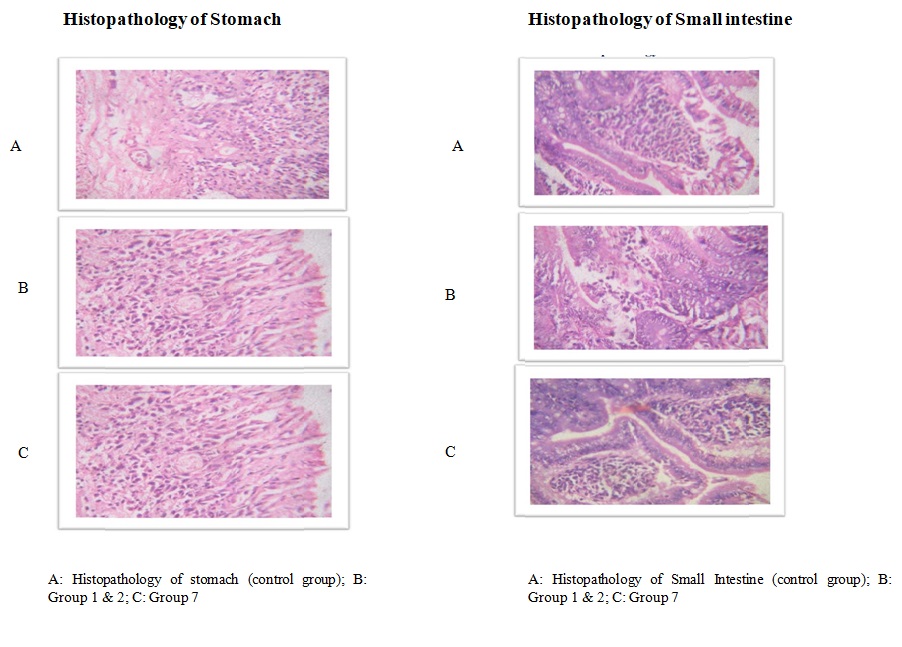
Histopathological analysis revealed that in the control group, the small intestine exhibited normal glands and villi, with mild lymphocytic and plasma cellular infiltrate in the mucosa and submucosa, along with minimal edema. The stomach displayed glands lined by columnar cells, with diffuse infiltrates of lymphocytes and plasma cells in the mucosa, submucosa, and muscularis mucosa. In Group 1&2, the small intestine and stomach showed similar histological features to the control group, with no significant abnormalities. However, in Group 7, while the stomach appeared normal, the small intestine exhibited mild to moderate lymphocytic and plasma cellular infiltrate, along with edema in the walls (Figure 2).
Discussion
Herbs are highly valued because they contain active ingredients as sources of medicinal compounds and play important roles in maintaining and improving human health. Semecarpus anacardium L. (Anacardiaceae) (SA) commonly known as Bhallataka or marking nut is used in indigenous Indian, African, and Arabic systems of medicine for the treatment of various diseases. The traditional system of purification (Śodhana) can influence the phytochemical, pharmacological, and toxicological profile of the plant drugs and thereby useful in increasing safety profile and efficacy of the drugs [23]. This study clearly demonstrated the weight loss observed after Śodhana may be due to the reduction of the oil content of the fruits. It reveals that after Śodhana the polar constituents decrease from the plant materials. The increase in ash value may be due to the addition of brick powder with plant material. A variety of nut extract preparations from this plant have been reported to have anti-atherogenic, anti-inflammatory, antioxidant, anti-reproductive, central nervous system (CNS) stimulating, hypoglycemic, and anti-carcinogenic activities. [10].
The qualitative analysis of Bhallathaka during Shodhana, using techniques such as high-pressure thin-layer chromatography (HPTLC) and gas chromatography (GC), revealed significant alterations. Shodhana reduces the phenolic and flavonoid content while eliminating toxic constituents, as evidenced by the disappearance of certain peaks in chromatographic analyses [24]. This transformation underscores the effectiveness of Shodhana in purifying Bhallathaka. The concept of Śodhana in Ayurveda not only covers the process of purification/detoxifcation of physical as well as chemical impurities but also covers the minimization of side effects and improving the potency/therapeutic efficacy of the purified drugs [25].Previous scientific studies have explored various aspects of SA, including the impact of Ayurvedic shodhana on Bhallataka fruits' anacardol content,[26] phytochemical screening, antimicrobial activity evaluation,[27] purification for arthritis treatment,[28] hypoglycemic and anti-hyperglycemic effects, and the anti-diabetic and antioxidant effects of SA nut milk extract in a high-fat diet-induced type 2 diabetic rat model [29,30].
Assessment of acute toxicity (LD50) for both purified and non-purified samples of Bhallatakafruits indicated that no mortality occurred at a dosage of 2gm/kg body weight, suggesting an LD50 value higher than this dosage. Behavioral observations throughout the study revealed no signs of toxic effects, such as tremors, salivation, lethargy, coma, diarrhea, or alterations in skin, fur, and eyes among the rats. Additionally, no significant decrease in body weight was observed in any group compared to the control group, indicating minimal toxic effects. Significant increases in food and water consumption were observed in Groups 3, 4, 5, and 6 compared to the control group, while Groups 1&2 and 7 showed no significant changes. Necropsy findings in the control group indicated inflamed and constricted areas in the small intestine and inflamed stomachs in all animals, with similar findings in Group 1&2 and Group 7 regarding the small intestine. Serum Glutamate Oxaloacetate Transaminase (SGOT), Serum Glutamate Pyruvate Transaminase (SGPT), and Alkaline Phosphatase (ALP) levels, indicative of liver function, remained within normal limits in the control group, with no significant elevation observed in other groups, suggesting preserved liver function post-drug administration. Similarly, serum creatinine and urea levels, markers of kidney function, showed no significant differences compared to the control group, indicating no renal toxicity from Bhallataka fruit administration at 2gm/kg body weight. Hematological parameters, including Hb, Total RBC, and Platelet count, remained unchanged post-administration, while slight elevations in ESR and Total WBC count in Group 1&2 and Group 7 indicate mild inflammation, consistent with histopathological findings. Minor histopathological changes, such as lymphocytic and plasma cellular infiltrate with minimal edema in the small intestine mucosa and submucosa, were observed in the control group, with similar changes seen in Group 1&2 and Group 7, along with edema in the latter. The study suggested that purified Bhallataka fruits pose less risk for internal administration compared to non-purified ones, with specific purification methods identified as safer based on animal toxicity data. Sulaiman et al, 2021 showed that the traditional purification process of Bhallathaka was found to induce chemical changes, enhancing its anti-cancer activity and suggesting potential benefits for increasing the safety and efficacy of herbal drugs [31].
Conclusion
The findings from the acute toxicity study suggest that purified Bhallataka fruits are preferable for internal administration in humans compared to non-purified counterparts, as the latter induced toxicity in the small intestine and stomach walls. Among the purified samples, methods such as those outlined in Raja Nighantu (Group 3), Rasamritham (Group 4), Arogyakalpadrumam (Group 5), and Sahasrayogam (Group 6) were identified as safe purification processes, as they did not elicit any toxic effects in the animal models. This fundamental research study primarily focused on animal experimentation, thus its applicability to clinical experimentation remains restricted. However, the findings provide a foundation for further investigations into Bhallataka Shodhana. Further studies can delve into clinical experimentation to expand our understanding of BhallatakaShodhana. Additionally, Ayurvedic pharmaceutical companies can leverage the various purification methods identified in this study for manufacturing compounds containing Bhallataka. There exists a wide scope for future evaluations of BhallatakaShodhana, particularly by utilizing marker compounds to determine the most effective method of purification.
Declarations
Acknowledgements
The authors sincerely thank Ms. Litty V.J., Librarian, and Mr. Jicco J. Kodankandath, Deputy Librarian, Department of Library and Research Documentation, Amala Institute of Medical Sciences, Amala Nagar, Thrissur, for their invaluable support and assistance throughout this work.
Conflict of Interest Declaration
The authors declare no conflict of interest. There are no financial or personal relationships that could have influenced or biased the content or findings presented in this work.
Funding/Financial Support
This research received no specific funding from any public, commercial, or not-for-profit funding agency.
Disclosure Statement
The authors confirm that this work was conducted in the absence of any commercial or financial relationships that could be construed as a potential conflict of interest. All findings reported are independent and unbiased.