
The Study of Cord Blood Albumin as a Risk Predictor of Neonatal Hyperbilirubinemia
Authors

##plugins.themes.bootstrap3.article.sidebar##
##plugins.themes.bootstrap3.article.main##
Abstract
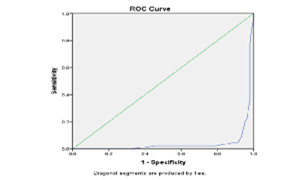
Objective: To study correlation between umbilical cord blood albumin (CBA) and neonatal hyperbilirubinemia. Methods: From January 2023 to December 2023, a prospective observational study was conducted on 150 neonates, clinically stable babies delivered either vaginally or by caesarean section with birth weight ≥2 kg. At birth, CBA was analysed and neonate was followed up till 72 hours of birth for hyperbilirubinemia. Detailed analysis was done to correlate CBA with significant hyperbilirubinemia requiring treatment according to >35 weeks charts (AAP guidelines 2022). The statistical analysis used were Microsoft Excel and SPSS software. A p-value of less than 0.05 was considered statistically significant. Result: On the basis of CBA obtained, all the neonates were classified into 3 groups, 1st of 2-2.5g/dl, 2nd of 2.51 – 3g/dl and 3rd of >3g/dl. Significant hyperbilirubinemia (requiring phototherapy) was observed in 45 (30%) neonates and 105 neonates (70%) had no hyperbilirubinemia. The association between CBA levels and neonatal hyperbilirubinemia had strong statistically significant relationship (p<0.05). Conclusion: It was concluded that, CBA level of 2.15mg/dl belonging to group 1 had the highest sensitivity (95%) and specificity (100%) to predict appearance of significant neonatal hyperbilirubinemia and was statistically significant (p value<0.05).
##plugins.themes.bootstrap3.article.details##
Copyright (c) 2025 Dr. Asmita Tripathy, Dr. Dhara Gosai, Dr. Gargi H. Pathak

This work is licensed under a Creative Commons Attribution 4.0 International License.
Creative Commons License All articles published in Annals of Medicine and Medical Sciences are licensed under a Creative Commons Attribution 4.0 International License.
[1] Rubartelli F, Dani C. Neonatal jaundice. Textbook of Perinatal Medicine. 2nd ed. New York: Informa Healthcare. 2006:58-68.
[2] Cloharty JP SA, Eichenwald EC, Hansen AR. Manual of neonatal care. Chapter 26, Neonatal Hyperbilirubinemia. 2012. ;7th edn:p. 304-39.
[3] Rehna T, Shiyas K. Comparison of umbilical cord blood bilirubin (UCB) and bilirubin albumin ratio (BAR) inn predicting neonatal hyperbilirubinemia: a prospective observational study. Indian J Neonatal Med Res. 2021; 9:5-9.
[4] Gupta N, Taran SJ, Gupta S, kishore Arora K. Role of cord blood albumin and bilirubin for prediction of significant neonatal jaundice. Journal of Nepal Paediatric Society. 2021 Nov 3;41(2):239-46.
[5] Huda WM, Sharma P, Aggarwa J, et al. A comparative study of cord blood bilirubin and albumin as a predictor for neonatal jaundice in term newborns. Journal of Datta Meghe Institute of Medical Sciences University. 2021;16(2):295-302.
[6] Ahmar R, Parween S, Kumar A, Gupta AK. Cord Serum Albumin (CSA) Measurement and Prediction of Newborn Hyperbilirubinemia Based on CSA Values: Prospective Observational Study. Methodology. 2020 Jul.
[7] El Mashad GM, El Sayed HM, El Shafie WA. Cord blood albumin–bilirubin as a predictor for neonatal hyperbilirubinemia. Menoufia medical journal. 2019;32(3):1071-7.
[8] Anupriya KS, Pradeep N. Cord blood albumin level as a predictor of neonatal physiological jaundice in healthy term neonate. Indian Journal of Child Health. 2023;10(6):77-9.
[9] Meena JK, Singh S, Verma CR, Sharma R. Utility of cord blood albumin as a predictor of significant neonatal jaundice in healthy term newborns. Pediatric Oncall Journal. 2015 Oct;12(4):99-102.
[10] Gupta A, Gupta P, Ali SS, Gupta S. Effect of mode of delivery: Normal, induced and caesarean section on neonatal serum bilirubin. Indian J Clin Anat Physiol. 2016 Jul;3(3):269-72.
[11] Sandhya J, Rajini PV, Seshasaila B, Jyothi N, Manas TA, Anvesh T. Cord blood bilirubin and albumin as predictors of neonatal hyperbilirubinemia in healthy term babies.
[12] Chapter 50, Plasma Proteins and Immunoglobulins; 2006:p629-45.