
Attitudes Toward Artificial Intelligence Among Technical and Non-Technical Employees: A GAAIS-Based Comparative Study
Authors

##plugins.themes.bootstrap3.article.sidebar##
##plugins.themes.bootstrap3.article.main##
Abstract
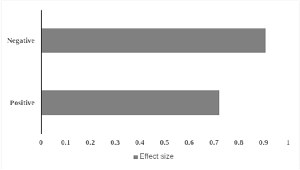
Background: The rapid integration of AI into workplaces highlights the need to understand employee attitudes influencing acceptance and use, yet multidimensional comparisons between technical and non-technical employees remain limited. Aim: To compare attitudes toward AI between technical and non-technical employees using the General Attitudes Toward Artificial Intelligence Scale (GAAIS), assessing both positive evaluations (e.g., usefulness, innovation) and negative concerns (e.g., errors, loss of control). Methodology: A cross-sectional study of 85 employees (technical = 58; non-technical = 27) using workplace AI assessed attitudes via the GAAIS and demographics; group differences were analyzed using Welch’s t-tests with Hedges’ g effect sizes visualized in forest plots. Results: Technical employees showed moderate Positive (3.65 ± 0.26) and lower Negative (2.99 ± 0.39) scores. Thirteen items differed significantly between groups, with non-technical employees exhibiting higher Positive and Negative subscale scores, reflecting greater attitudinal polarization and longer organizational AI exposures. Conclusion: Technical employees exhibited more stable, experience-based attitudes toward AI, balancing perceived benefits with lower levels of concern. These findings highlight their potential role as key stakeholders in responsible and sustainable organizational AI implementation.
##plugins.themes.bootstrap3.article.details##
Copyright (c) 2026 Varma PSK, Anshu Pinnama Raju, Ashwin Kandula, Partha Bhattacharya, Maha Lakshmi Keerthana Kalidindi, Attili Venkata Satya Suresh, Natukula Kirmani

This work is licensed under a Creative Commons Attribution 4.0 International License.
Creative Commons License All articles published in Annals of Medicine and Medical Sciences are licensed under a Creative Commons Attribution 4.0 International License.
[1] Kergroach S. Industry 4.0: New Challenges and Opportunities for the Labour Market. Foresight and STI Governance [Internet]. 2017 Dec.11 [cited 2025Dec.13];11(4):6-8. Available from: https://foresight-journal.hse.ru/article/view/19134.
[2] Puaschunder JM. Organizational Artificial Intelligence Behavior. SSRN Electronic Journal. 2019;1-9.
[3] Makarius E E, Mukherjee D, Fox J D, Fox A K. Rising with the machines: A sociotechnical framework for bringing artificial intelligence into the organization. Journal of business research. 2020; 120, 262-273. https://doi.org/10.1016/j.jbusres.2020.07.045
[4] Glikson E, Woolley A W. Human trust in artificial intelligence: review of empirical research. The Academy of Management annals. 2020, 14(2), 627-660. https://doi.org/10.5465/annals.2018.0057
[5] Ricardo Costa-Climent, Darek M. Haftor, Marcin W. Staniewski. Using machine learning to create and capture value in the business models of small and medium-sized enterprises, International Journal of Information Management. 2023; 73, 102637. https://doi.org/10.1016/j.ijinfomgt.2023.102637
[6] Ida Lindgren. Ironies of automation and their implications for public service automation. Government Information Quarterly. 2024; 41(4), 101974. https://doi.org/10.1016/j.giq.2024.101974
[7] Rajabi E, Etminani, K. Knowledge-graph-based explainable AI: A systematic review. Journal of Information Science. 2024; 50(4), 1019–1029. https://doi.org/10.1177/01655515221112844
[8] Mijwil M, Aljanabi M, Ali A H. ChatGPT: Exploring the role of cybersecurity in the protection of medical information. Mesopotamian Journal of CyberSecurity. 2023; 18– 21. https://doi.org/10.58496/MJCS/2023/004.
[9] Rahimi F, Abadi A T B. ChatGPT and publication ethics. Archives of Medical Research. 2023; 54(3), 272–274. https://doi.org/10.1016/j.arcmed.2023.03.004
[10] Onal S, Kulavuz-Onal D. A cross-disciplinary examination of the instructional uses of ChatGPT in higher education. Journal of Educational Technology Systems. 2024; 52(3), 301–324. https://doi.org/10.1177/00472395231196532
[11] Özkiziltan, Didem and Hassel, Anke, Artificial Intelligence at Work: An Overview of the Literature (March 3, 2021). Available at SSRN: https://ssrn.com/abstract=3796746 or http://dx.doi.org/10.2139/ssrn.3796746
[12] Nazareno L, Schiff D S. The impact of automation and artificial intelligence on worker well-being. Technol. Soc. 2021; 67:101679. https://doi.org/10.1016/j.techsoc.2021.101679
[13] Peters M A. Technological unemployment: Educating for the fourth industrial revolution. Educ. Philos. Theory. 2017; 49, 1–6. https://doi.org/10.1080/00131857.2016.1177412
[14] Stamate A N, Sauvé G, Denis P L. The rise of the machines and how they impact workers' psychological health: An empirical study. Human Behavior and Emerging Technologies. 2021; 3(5), 942–955. https://doi.org/10.1002/hbe2.315.
[15] Ångström, R. C., Björn, M., Dahlander, L., Mähring, M., & Wallin, M. W. (2023). Getting AI Implementation Right: Insights from a Global Survey. California Management Review. 2023;66(1), 5–22. https://doi.org/10.1177/00081256231190430
[16] Schepman A, Rodway P. (2023). The General Attitudes towards Artificial Intelligence Scale (GAAIS): Confirmatory validation and associations with personality, corporate distrust, and general trust. International Journal of Human Computer Interaction. 2023; 39(13), 2724-2741. https://doi.org/10.1080/10447318.2022.2085400.
[17] Alfalah A A. Factors influencing students’ adoption and use of mobile learning management systems (m-LMSs): A quantitative study of Saudi Arabia. International Journal of Information Management Data Insights. 2023; 3(1), 100143. https://doi.org/10.1016/j.jjimei.2022.100143
[18] Venkatesh V, Thong J Y, Xu X. Consumer acceptance and use of information technology: Extending the unified theory of acceptance and use of technology. MIS Quarterly. 2012; 36(1), 157–178. https://doi.org/10.2307/41410412.
[19] Farooq MS, Salam M, Jaafar N, Fayolle A, Ayupp K, Radovic-Markovic M, Sajid A. Acceptance and use of lecture capture system (LCS) in executive business studies: Extending UTAUT2". Interactive Technology and Smart Education. 2017; 14 (4) 329–348. doi: https://doi.org/10.1108/ITSE-06-2016-0015
[20] Ustun AB, Karaoglan-Yilmaz F G, Yilmaz, R. Educational UTAUT-based virtual reality acceptance scale: A validity and reliability study. Virtual Reality. 2023; 27(2), 1063–1076. https://doi.org/10.1007/s10055-022-00717-4.
[21] Prasad K, Singh S, Srinivas V, Kothari H, Pathak A, Shrimali, D. Factors Affecting the Adoption of Generative AI Tools Among Information Technology Employees: A UTAUT3, TTF, and SOR Perspective. Journal of Computational and Cognitive Engineering. 2025 https://doi.org/10.47852/bonviewJCCE52026127.
[22] Park YJ, Jones-Jang S M. Surveillance, privacy, and algorithmic inequality: A study of workers' perspectives. Journal of Communication. 2022; 72(6), 680-695. https://doi.org/10.1093/joc/jqac031.
[23] Jordan PJ, Ashkanasy NM, Härtel CE, Hooper GS. Workgroup emotional intelligence: Scale development and relationship to team process effectiveness and goal focus. Human Resource Management Review. 2008; 12(2), 195-214. https://doi.org/10.1016/S1053-4822(02)00046-3
[24] Venkatesh V. Adoption and use of AI tools: a research agenda grounded in UTAUT. Ann Oper Res. 2022; 308, 641–652. https://doi.org/10.1007/s10479-020-03918-9.
[25] Mer A, Srivastavab A. Employee engagement in the new Normal: artificial intelligence as a buzzword or a game changer?” in the adoption and effect of artificial intelligence on hum resources management, part A (Emerald Publishing), 2023;15–46. https://doi.org/10.1108/978-1-80382-027-920231002.
[26] Soulami M, Benchekroun S, Galiulina A. Exploring how AI adoption in the workplace affects employees: a bibliometric and systematic review. Front Artif Intell. 2024; 14; 7:1473872. doi: 10.3389/frai.2024.1473872
[27] Wanberg CR, Banas J T. Predictors and Outcomes of Openness to Changes in a Reorganizing Workplace. Journal of applied psychology. 2000;85(1), 132-142. https://doi.org/10.1037/0021-9010.85.1.132.
[28] Davis F D. Perceived Usefulness, Perceived Ease of Use, and User Acceptance of Information Technology. MIS quarterly. 1989,13(3), 319-340. https://doi.org/10.2307/249008.
[29] Venkatesh V, Morris MG, Davis GB, Davis FD. User Acceptance of Information Technology: Toward a Unified View. (September 1, 2003). MIS Quarterly. 2003; 27(3), 425-478, 2003, Available at SSRN: https://ssrn.com/abstract=3375136.
[30] Chatterjee S, Rana NP, Dwivedi Y K, Baabdullah A M. Understanding AI adoption in manufacturing and production firms using an integrated TAM- OE model. Technological forecasting & social. 2021; 170, 120880. https://doi.org/10.1016/j.techfore.2021.120880.
[31] Cao G, Duan Y, Edwards J S, Dwivedi Y K. Understanding managers’ attitudes and behavioral intentions towards using artificial intelligence for organizational decision-making. Technovation, 2021; 106, 102312. https://doi.org/10.1016/j.technovation.2021.102312.
[32] Wei W, Li L. The impact of artificial intelligence on the mental health of manufacturing workers: The mediating role of overtime work and the work environment. Front. Public Health. 2022; 10:862407. https://doi.org/10.3389/fpubh.2022.862407