
Global Childhood Obesity and Metabolic Syndrome: Prevalence, Risk Factors, and Meta-Analytic Evidence
Authors

##plugins.themes.bootstrap3.article.sidebar##
##plugins.themes.bootstrap3.article.main##
Abstract
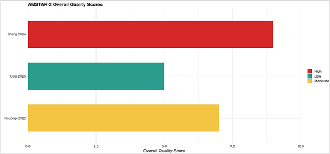
Background: Childhood obesity and metabolic syndrome are fast becoming major health challenges worldwide, although the estimates of prevalence rates vary largely due to the varying definitions, populations, and methodologies. Synthesizing contemporary evidence is essential for understanding the true magnitude and epidemiological pattern of these conditions. Aim and Objective: The objective was to answer the research question: "What is the pooled prevalence of childhood obesity and metabolic syndrome globally between 2021 and 2025, and what epidemiological patterns, risk factors, and clinical implications emerge from the recent evidence?" Methods: A systematic search of PubMed, Scopus, Embase, and Web of Science was conducted from 2021 to 2025 using predefined keywords. Ten studies entered qualitative synthesis, while five with extractable proportions entered meta-analysis. Data extraction was performed using Microsoft Excel (version 16), while statistical analyses were carried out in RStudio, including random-effects pooling, funnel plot asymmetry tests, and linear regression. Quality assessment was done using the AMSTAR-2, NOS, and JBI tools. Results: The pooled prevalence from five studies was 9.2% (95% CI 7.1–11.3) with extreme heterogeneity (I² ≈ 99.99%, p < 0.001). Funnel plot asymmetry tests, including Egger's test (p > 0.05), indicated no significant publication bias. Epidemiological patterns from the studies showed rising obesity trends and a MetS prevalence of 3–5%, consistent with associations to lifestyle-linked risk factors. Conclusion: Childhood obesity is still a significant and growing global burden, while MetS affects a smaller but clinically important subset. Heterogeneity emphasizes the need for standardized definitions and stratified risk assessment. Integrated preventive strategies and enhanced surveillance systems are urgently needed.
##plugins.themes.bootstrap3.article.details##
Copyright (c) 2025 Sakthivel S, Preyeamvadha R, Jamila Hameed

This work is licensed under a Creative Commons Attribution 4.0 International License.
Creative Commons License All articles published in Annals of Medicine and Medical Sciences are licensed under a Creative Commons Attribution 4.0 International License.
Sakthivel S, Department of Paediatrics, Karuna Medical College, Vilayodi, Chittur, Palakkad, Kerala, 678103, India.
Department of Paediatrics, Karuna Medical College, Vilayodi, Chittur, Palakkad, Kerala, 678103, India.
Preyeamvadha R, Department of Paediatrics, Karuna Medical College, Vilayodi, Chittur, Palakkad, Kerala, 678103, India.
Department of Paediatrics, Karuna Medical College, Vilayodi, Chittur, Palakkad, Kerala, 678103, India.
Jamila Hameed, Research Mentor, Department of OBG, Karuna Medical College, Vilayodi, Chittur, Palakkad, Kerala, 678103, India.
Research Mentor, Department of OBG, Karuna Medical College, Vilayodi, Chittur, Palakkad, Kerala, 678103, India.
[1] Chung ST, Onuzuruike AU, Magge SN. Cardiometabolic risk in obese children. Annals of the New York Academy of Sciences. 2018 Jan;1411(1):166-83.
[2] Drozdz D, Alvarez-Pitti J, Wójcik M, Borghi C, Gabbianelli R, Mazur A, Herceg-Čavrak V, Lopez-Valcarcel BG, Brzeziński M, Lurbe E, Wühl E. Obesity and cardiometabolic risk factors: from childhood to adulthood. Nutrients. 2021 Nov 22;13(11):4176.
[3] Singleton CM, Brar S, Robertson N, DiTommaso L, Fuchs III GJ, Schadler A, Radulescu A, Attia SL. Cardiometabolic risk factors in South American children: A systematic review and meta-analysis. Plos one. 2023 Nov 22;18(11):e0293865.
[4] Grabia M, Markiewicz-Żukowska R, Socha K. Prevalence of Metabolic Syndrome in Children and Adolescents with Type 1 Diabetes Mellitus and Possibilities of Prevention and Treatment: A Systematic Review. Nutrients. 2021 May 23;13(6):1782.
[5] Kotzé-Hörstmann LM, Bedada DT, Johnson R, Mabasa L, Sadie-Van Gijsen H. The effects of a green Rooibos (Aspalathus linearis) extract on metabolic parameters and adipose tissue biology in rats fed different obesogenic diets. Food Funct. 2022 Dec 13;13(24):12648-12663. doi: 10.1039/d2fo02440c. PMID: 36441182.
[6] Reisinger C, Nkeh-Chungag BN, Fredriksen PM, Goswami N. The prevalence of pediatric metabolic syndrome-a critical look on the discrepancies between definitions and its clinical importance. Int J Obes (Lond). 2021 Jan;45(1):12-24.
[7] Zong X, Kelishadi R, Kim HS, Schwandt P, Matsha TE, Mill JG, Caserta CA, Medeiros CCM, Kollias A, Whincup PH, Pacifico L, López-Bermejo A, Zhao M, Zheng M, Xi B. A proposed simplified definition of metabolic syndrome in children and adolescents: a global perspective. BMC Med. 2024 May 7;22(1):190.
[8] Noubiap JJ, Nansseu JR, Lontchi-Yimagou E, Nkeck JR, Nyaga UF, Ngouo AT, Tounouga DN, Tianyi FL, Foka AJ, Ndoadoumgue AL, Bigna JJ. Global, regional, and country estimates of metabolic syndrome burden in children and adolescents in 2020: a systematic review and modelling analysis. Lancet Child Adolesc Health. 2022 Mar;6(3):158-170.
[9] Cheng CF, Ni YH. Editorial: Pediatric Obesity: From the Spectrum of Clinical-Physiology, Social-Psychology, and Translational Research. Front Pediatr. 2021 Sep 28; 9:762189.
[10] Hu K, Staiano AE. Trends in Obesity Prevalence Among Children and Adolescents Aged 2 to 19 Years in the US From 2011 to 2020. JAMA Pediatr. 2022 Oct 1;176(10):1037-1039.
[11] Kim EG, Kaelber DC. Phenotypic prevalence of obesity and metabolic syndrome among an underdiagnosed and underscreened population of over 50 million children and adults. Front Genet. 2022 Sep 6; 13:961116.
[12] AlEnazi S, AlAjlan R, AlKhalaf H, Abolfotouh M, Alharbi O, Alfawaz R, Aldebasi B, Alghnam S. Prevalence of Obesity among Children and Adolescents in Saudi Arabia: A Multicenter Population-Based Study. Saudi J Med Med Sci. 2023 Jan-Mar;11(1):19-25.
[13] Xi B, Cadenas-Sanchez C. Editorial: Metabolically healthy and unhealthy obese children and adolescents, volume II. Front Endocrinol (Lausanne). 2022 Dec 19; 13:1111060.
[14] Aravindakshan SS, David A, Saradakutty G, Agarwal P. Prevalence of Metabolic Syndrome and Its Associated Risk Factors Among Schoolchildren Aged 11-13 Years Living in Thiruvananthapuram District, Kerala, India: A Nested Case-Control Study. Cureus. 2024 Nov 4;16(11):e72994.
[15] Chugh V, Arya A. Metabolic syndrome risk assessment in Indian children and adolescents. InHORMONE RESEARCH IN PAEDIATRICS 2019 Sep 1 (Vol. 91, pp. 425-425). ALLSCHWILERSTRASSE 10, CH-4009 BASEL, SWITZERLAND: KARGER.
[16] González-Gil EM, Anguita-Ruiz A, Kalén A, De Las Lamas Perez C, Rupérez AI, Vázquez-Cobela R, Flores K, Gil A, Gil-Campos M, Bueno G, Leis R, Aguilera CM. Longitudinal associations between cardiovascular biomarkers and metabolic syndrome during puberty: the PUBMEP study. Eur J Pediatr. 2023 Jan;182(1):419-429. doi: 10.1007/s00431-022-04702-6. Epub 2022 Nov 15. PMID: 36376521; PMCID: PMC9829643.
[17] Zhang X, Liu J, Ni Y, et al. Global Prevalence of Overweight and Obesity in Children and Adolescents: A Systematic Review and Meta-Analysis. JAMA Pediatr. 2024;178(8):800-813.
[18] Park H, Choi JE, Jun S, Lee H, Kim HS, Lee HA, Park H. Metabolic complications of obesity in children and adolescents. Clinical and Experimental Pediatrics. 2023 Nov 16;67(7):347.
[19] Pigeot I, Ahrens W. Epidemiology of metabolic syndrome. Pflugers Arch. 2025 May;477(5):669-680. doi: 10.1007/s00424-024-03051-7.
[20] Bitew ZW, Alemu A, Ayele EG, Tenaw Z, Alebel A, Worku T. Metabolic syndrome among children and adolescents in low and middle income countries: a systematic review and meta-analysis. Diabetol Metab Syndr. 2020 Oct 27; 12:93.
[21] Sinha S, Ahmad R, Chowdhury K, Islam S, Mehta M, Haque M. Childhood Obesity: A Narrative Review. Cureus. 2025 Apr 14;17(4):e82233.
[22] Ferreira IBB, Gomes AN, Almeida IBC, Fernandes MD, Coutinho LF, Lago R, Menezes CA, Vianna NA, Oliveira RR, Fukutani ER, Menezes RC, Ladeia AM, Andrade BB. Childhood obesity is associated with a high degree of metabolic disturbance in children from Brazilian semi-arid region. Sci Rep. 2024 Jul 30;14(1):17569.
[23] Peprah Osei E, Ekpor E, Osei GY, Akyirem S. Global prevalence and factors associated with overweight and obesity in children and adolescents with type 1 diabetes: a systematic review and meta-analysis. J Diabetes Metab Disord. 2025 Nov 4;24(2):257.
[24] Rajamoorthi A, LeDuc CA, Thaker VV. The metabolic conditioning of obesity: A review of the pathogenesis of obesity and the epigenetic pathways that "program" obesity from conception. Front Endocrinol (Lausanne). 2022 Oct 18;13:1032491.